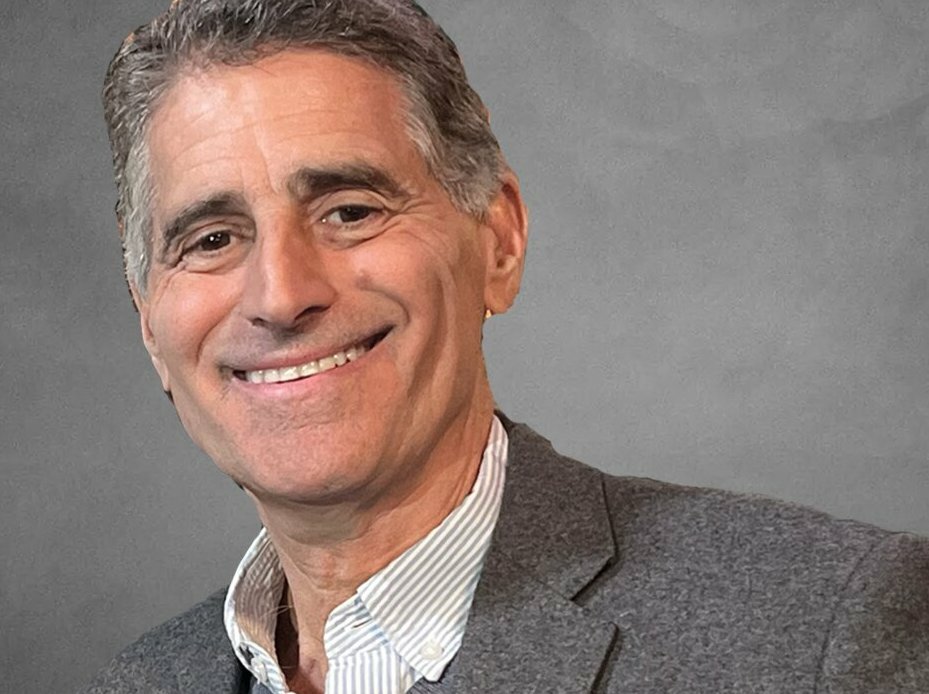
By Steve Levy
In Texas, we’ve seen Democratic state legislators flying the “coup” as Republicans try to manipulate the redistricting process to maximize Republican strength. Meanwhile, in New York, Republicans are complaining that the Democratic-controlled Legislature is trying to maximize redistricting to its advantage.
It’s the same old story, in which those on both sides of the aisle play games on redistricting to benefit themselves. It’s why reformers have been pushing for decades to take the process out of the hands of self-interested elected officials whose only goal is to protect their incumbency.
When I was county executive, I passed a landmark bill to take the role of redrawing district lines away from elected officials and give it instead to an independent panel. It was passed with great fanfare, with the governor coming to Suffolk County to lend support as I signed the legislation.
But, lo and behold, several years later, when it was about to kick in, the Democratic-controlled Legislature abolished the reform and went back to the old system of having the Legislature control the process. This was done, of course, because at the time the Democrats were in control.
It’s wrong for either party to manipulate this process.
It’s true that the Republicans in Texas are throwing a new fly into the ointment by opting to implement the 10-year redistricting process, which usually coincides with the disclosure of the new census, five years earlier than normal. They’re doing this to try to get as many as five new seats for the GOP before the 2026 midterms.
Now governors from New York to California and elsewhere are warning that they will do the same to maximize seats for Democrats prior to the next census. But the Democrats don’t have clean hands here, either.
We need independence. But some complain that even when you appoint good-government groups and retired judges to draw district lines, politics will still come into play.
Ironically, it was in New York where Democrats sought to circumvent a voter-approved 2014 referendum to establish such independence. When the independent panel did indeed more equitably draw the lines, the Democrats immediately sought to ignore them and drew their own partisan lines. The GOP brought suit to uphold the independent lines, which led to Republicans picking up four crucial seats in New York in 2022, handing the House of Representatives back to the GOP.
The Democratic majority even had the audacity to revamp the state’s highest court, the Court of Appeals, by forcing out a moderate Democratic chief justice and putting in place a far-left jurist who supported their gerrymandering.
Unfortunately, even well-intentioned attempts at reform can often fail to produce the desired results. Take California, which in 2008 passed a referendum supported by then Gov. Arnold Schwarzenegger to create an independent commission to draw district lines. If its goal was to create fair districts and a better bipartisan balance, it was a failure. At the time of the referendum’s passage, there were 34 Democrats and 19 Republicans in the state’s congressional caucus. By 2012 there were 38 Democrats and 15 Republicans — and this year there are 43 Democrats and just nine Republicans.
While much of this can be attributed to changing demographics and political issues of the day, some of it might be attributable to the biases of even those appointees who claim to be nonpartisan.
So here’s a potential solution. Why not have the lines redrawn using artificial intelligence? Just log in that we want the fairest redistricting possible to create the most balanced districts from the perspective of demographics and political party registration. That would take the politics out of the system, and make our races more competitive. And best of all, it would ultimately make our elected officials more reactive to the center rather than the extremes on both ends of the political spectrum.
Of course, the outcome of AI is only as good as the input. Care must be taken to ensure that a balanced group of nonpartisan technocrats prepare the algorithms, as opposed to party hacks. There’s no foolproof solution, but AI may present the best of all the options available.
Steve Levy is president of Common Sense Strategies, a political consulting firm. He served as Suffolk County executive and as a state assemblyman. He can be reached at steve@commonsensestrategies.com.