
Thursday, October 1, 2026
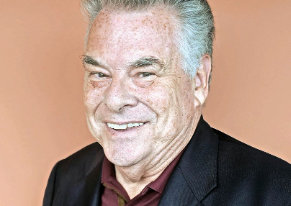
Recently I took part in several WABC radio talk shows moderated by the station’s owner, New York business mogul John Catsimatidis. The topics we covered initially focused on Mayor-elect Zohran Mamdani’s election, County Executive Bruce Blakeman’s overwhelming victory in last month’s election and the upcoming statewide race for New York governor. Among the participants were veteran political leader Craig Eaton, a former chairman of the Republican Party in Brooklyn, and David Paterson, whose decades-long career of service included being governor, state senator and state Democratic Party chairman.
The conversations soon veered from specific races to the issue of the almost total disappearance of bipartisanship in today’s politics and government. Despite our varying political views and beliefs, we were in full agreement that needless partisanship and mindless rancor are weakening the nation’s fabric and threaten our future.
Let me be clear. I say this not as a blind idealist, nor as someone who believes that the old days were all love and harmony. Not after more than a half-century of fighting to survive the minefields of Nassau County, New York state and Washington politics! No, those days weren’t heaven on earth. But there were lines that weren’t to be crossed and responsibilities that had to be met.
And this sense of basic civility certainly precedes my time in politics. A clear example was the 1944 presidential election, between President Franklin D. Roosevelt, a Democrat who was running for his fourth term, and New York Gov. Thomas E. Dewey. After 12 years in office and almost total domination of the political scene, FDR was the Republicans’ number one political enemy. They wanted him stopped at all costs.
During the campaign, Dewey was secretly informed that United States intelligence had broken Japanese code months before the devastating attack on Pearl Harbor. That meant that Dewey could hold FDR responsible for failing to act on that vital intel, or, more conspiratorially, charge that FDR intentionally allowed the attack to go forward to drag the United States into World War II. Instead Dewey let it be known through channels that he would not use the devastating info: America was still at war, and Japan wasn’t aware we had broken its code. Dewey would not undermine the commander in chief in time of war, even if it meant not winning the presidency.
In later years, Ronald Reagan, our most conservative president, and then House Speaker Thomas P. “Tip” O’Neill, a diehard liberal, found ways to compromise — often over an evening drink — even on third-rail issues like Social Security. More important, they never let their political differences become personal.
Even during the much more partisan years of President Bill Clinton’s administration and Newt Gingrich’s House speakership, there were historic bipartisan achievements, including welfare reform and the only balanced budget and surplus in the past half-century.
During my time in Congress, I worked closely with Clinton on foreign policy issues such as the Good Friday Agreement, which ended the centuries-old struggle in Northern Ireland, and stopping Serbian aggression in the Balkans. And domestically, I successfully urged Clinton to revive the East Side Access project, connecting the Long Island Rail Road to Grand Central Station despite the opposition of his budget office and the lack of support from some New York Democrats.
In Congress I worked closely across the aisle on vital issues for New York, such as Sept. 11 health care and victims compensation, homeland security funding for police and first responders after 9/11, and disaster aid following Superstorm Sandy.
I was able to establish solid bipartisan relationships in Washington, with leading Democrats Chuck Schumer, Hillary Clinton, Charlie Rangel and Ed Towns, and in New York, with Paterson, Andrew Cuomo and former New York City Mayor Ed Koch, who was a source of advice and counsel for me.
All that I did with these Democrats was achieved without any of us sacrificing our core principles. These were combined efforts on issues that transcended party lines and benefited our constituents. We saved the partisan arguments for ideological issues on which we couldn’t find compromise. That’s what democracy should be all about. It worked for the betterment of the voters of my district, state and nation. We need more of it.
Peter King is a former congressman, and a former chair of the House Committee on Homeland Security. Comments? pking@ liherald.com.


