
Thursday, October 1, 2026
American foreign policy is at a watershed moment, comparable to the critical years after World War II, when the United States and our allies were forced to accept that the euphoria of victory over Nazi Germany and imperial Japan had been supplanted by the reality of the Iron Curtain and the threat of Soviet expansion. The Cold War had begun.
The NATO alliance was formed to prevent Joseph Stalin from emulating Adolf Hitler’s march through Europe after the Munich Conference capitulation in 1938, which had given Hitler virtually free rein to invade and seize Czechoslovakia. A decades-long struggle would continue through various iterations and crises until the collapse of the Soviet Union in 1991 — a struggle that today’s isolationists would have labeled an “endless war.” Fortunately, neither American political party elected isolationists during those defining 45 years. Pre-World War II isolationism had long since been consigned to the ash heap of history.
The fall of the Soviet Union in 1991 created a sense of euphoria similar to that of 1945 and ’46. Eastern Europe was liberated from the yoke of Soviet communist rule, and the Soviet republics declared their independence from Moscow. One of them was Ukraine, which, tragically, had been brutalized for centuries by Russia.
Ukraine was also left with thousands of Soviet nuclear weapons. In 1994, in keeping with the spirit of the Soviet demise, Ukraine gave up those weapons in return for guarantees of security from the United States, Britain and Russia, in what was known as the Budapest Agreement. All indicators seemed to foresee a reformed Russia, and no aggression of the type that drew the U.S. into the two world wars of the 20th century.
I accompanied President Bill Clinton and Secretary of State Madeleine Albright to Moscow in September 1998 for meetings with Russian President Boris Yeltsin and other Russian officials to strengthen economic and cultural ties between our two nations. The dialogue between the leaders was extremely positive. Then, after the Sept. 11 terrorist attacks in 2001, the newly elected Russian president, Vladimir Putin, was among the first foreign leaders to pledge President George W. Bush his full support.
There would be fits and starts with Russia during the later Bush years, including an incursion into Georgia, and then a promise by Secretary of State Hillary Clinton in 2009 that the Obama administration would “reset” the relationship with Russia. That reset never worked, and Russia seized Crimea from Ukraine in 2014. There was no Russian aggression during the first Trump administration, but then, in February 2022, Putin launched an invasion of Ukraine — the first invasion of a sovereign European nation since the end of World War II.
Ukraine, under its newly elected reform president, Volodymyr Zelensky, was expected to succumb in days or weeks. President Joseph Biden even offered to have American jets provide Zelensky safe passage out of Ukraine. But with the U.S. and NATO countries supplying weapons and logistical support, Zelensky and Ukraine have fought Russia to a stalemate for over three and a half years — longer than America’s war against Nazi Germany.
Russia has suffered more than a million casualties, and has had to resort to using North Korean troops. Its economy is in shambles. NATO has admitted two previously neutral nations, Sweden and Finland, and remains committed to defeating Russian aggression, having supplied more funding to Ukraine than the U.S. Unfortunately, President Trump has shown reluctance to stand with Ukraine, ascribing equal blame for the war to Zelensky — even berating him in the White House, telling him he had no cards to play.
Trump met with Putin in Alaska, and implored him to meet with Zelensky to reach a compromise. Putin implied that he would, but reneged. Realizing he was being played, Trump denounced Putin in his speech to the United Nations General Assembly last month, and just hours later, met one on one with Zelensky. Then, going full circle, Trump released a statement hailing Zelensky’s leadership, saying that Ukraine was in a position to “fight and win,” and pledging to continue to supply weapons to NATO for Ukraine’s use against Russia.
Trump’s turnabout will prevent a catastrophic replay of Munich and halt Putin’s attempt to rebuild the Russian empire. This defeat of Russian aggression in Europe will simultaneously send a clear message to China not to move against Taiwan or other Pacific nations such as the Philippines and Japan. The United States will remain the leader of the free world.
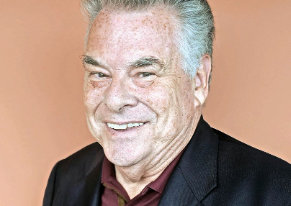
Peter King is a former congressman, and a former chair of the House Committee on Homeland Security. Comments? pking@ liherald.com.


