
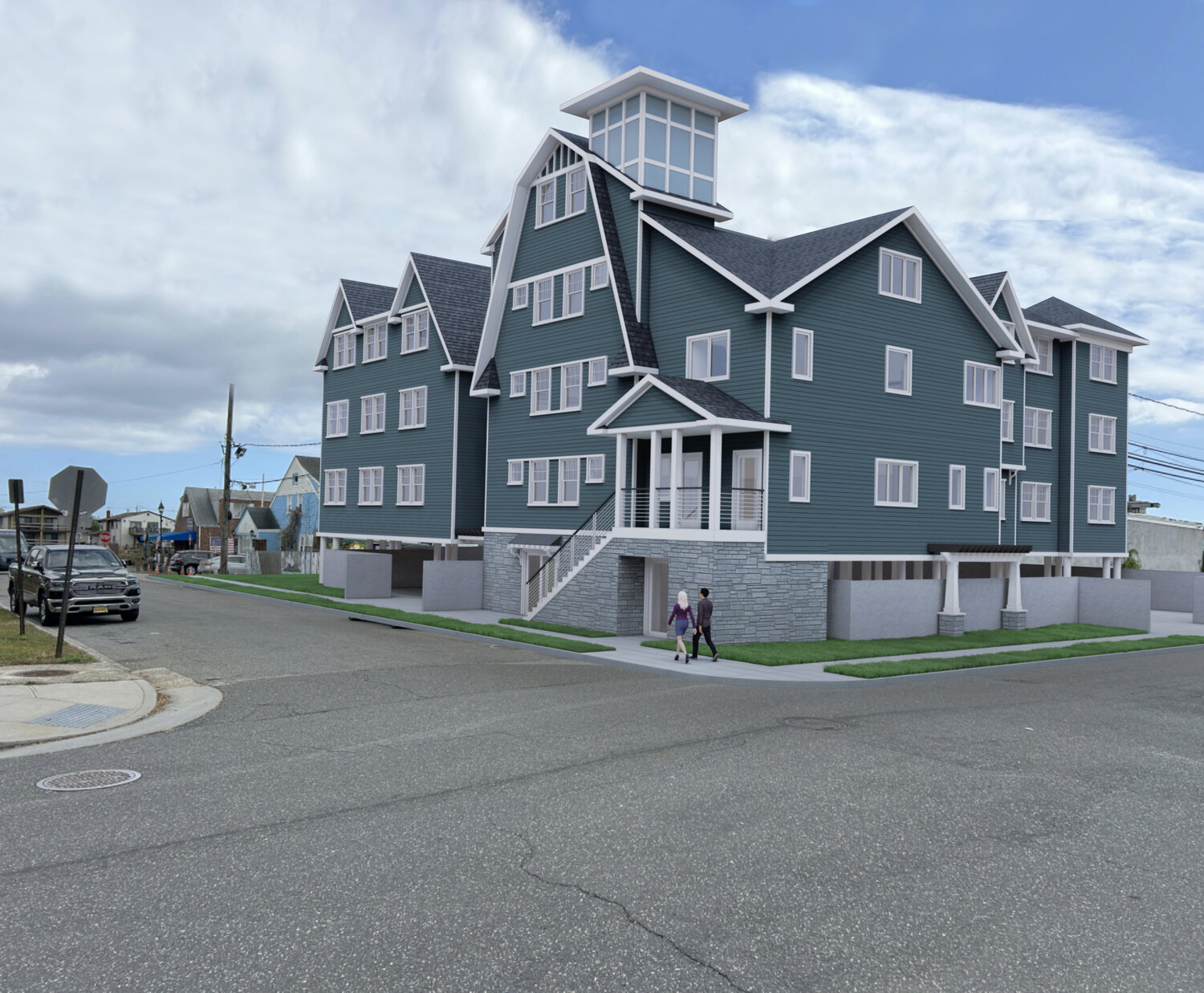
For more than four decades, Ben Jackson has been a fixture in Freeport through his business, Ben’s General Contracting Corp. Now, the longtime builder finds himself at the center of a zoning debate that could reshape a small stretch just off the Nautical Mile.
Jackson is seeking a variance to convert his Suffolk Street office and construction yard into a market-rate apartment complex, saying the shift is the only way to make the property financially viable after years on the market with no serious buyers.
His initial proposal for 20 one-bedroom units drew questions from the Freeport Zoning Board about parking, density, and height limits, and Jackson has been asked to scale the plan back before resubmitting.
In this conversation with the Herald Jackson explains why he believes new housing could strengthen the area, what he’s willing to change to address concerns, and why, despite the risks, he’s still determined to try.
Interview has been edited for clarity and length.
Q: Do you think Freeport zoning should be updated to allow for more housing near the Nautical Mile?
A: Do I think it should be, well, so on the Mile, no. But my thought process is, I’m not really on the Mile. I’m not on Woodcleft Avenue So I can’t have a boating business. I can’t get boats out, you know, to my property because I’m not on the water. I think the Nautical Mile, we should keep the standard there, and then we could do some great stuff. But off the Mile, which is on Ocean Avenue. I think it’s not a bad idea.
Q: You’ve owned Ben’s general contracting for 45 years. What led you to start thinking about repurposing your office and yard into housing?
A: It didn’t pay. I paid too much in taxes, everything else. You know, I thought it would be a good idea, but it just didn’t work in my favor.
Q: You had mentioned that the property had been up for sale for almost two years. What kind of interest did you get, and why do you think it didn’t end up selling?
A: I had some phone calls. I never even had an offer. You know, on the Ocean Avenue side, it’s kind of a depressed area. The business there, none of them are marine industrial, none of them fall under that category. Under the current zoning, nobody’s interested in it.
Q: Why did you originally propose a 20 unit building, and what was your vision for how it would really benefit Freeport?
A: I know zoning changes are a big ordeal, but I think allowing residential there, you know, not on a large scale, but a small scale — I plan on doing luxury apartments, not, you know, crap — yeah, I think, I think it’ll bring people to the Mile, bring people in the area. There’s a need for housing and so it’s a win-win.
Q: What’s your vision for how this apartment complex would really benefit Freeport?
A: Why do I think it would benefit Freeport? So you have properties that are undervalued; nobody can get what they paid for on Ocean Avenue. On that side of it, they’re undervalued. This is a way to bring up the value. There was concerns about the density of my property, so we haven’t been approved. I will have to cut it back, and there’s still no guarantees I’ll get approved.
Q: If you do decide to scale back, what might that smaller version of the project look like?
A: Well, we’re talking about going from 20 to 15 or 16 unit. I still need approval. The zoning board just asked me to to make it less dense, and I am working out the schematics of the drawings right now, and I’m working out the finances to make sure it’s worthwhile.
Q: And for the apartments themselves. Are you envisioning mostly studios, one bedroom, or a mix?
A: No, it’s all one bedroom. And the idea was it wouldn’t be a tax burden, because you typically wouldn’t have kids in a one bedroom. So it might be young people, maybe seniors, whoever wants it. There’s a need for housing, so the demand is there, yeah, but you know, it’s like a starter home, basically, is the idea.
Q: You’d said there’s a need for more market rate rentals in Freeport so what do you see as the biggest gap in the local housing market right now?
A: Oh, it spans everything. I mean, the housing market right now is — and I’m not an expert on this — but there’s a high demand for housing of all types, from single family homes to apartments to everything else.
Q: How might you respond to people who say that new apartments would add to congestion or change the character of neighborhoods?
A: Well, it would add to congestion. So congestion on the Nautical Mile is three months out of the year. So the other nine months, it’s desolate. So those other nine months, you know, now you have people there. Now you have 15 or 16 people who have a one bedroom apartment, who will go out. They need a place to eat, they need a place to shop. It’ll put a couple more people on the Mile.
Your restaurant owners who have told me these may be my customers. These may keep me open all year round. These may keep me open a couple more months. So, I’ve got a letter from the Chamber of Commerce in favor.
Every restaurant owner I’ve spoken to was in favor. Most of them spoke out. They were at the meetings and spoke out. Everybody thinks it’s a good thing, even the residents. We have one resident there, one local resident who was concerned about the parking and that’s one of the things that we’re addressing.
Q: Speaking of, they’d cited multiple zoning issues from height limits to parking shortages. Which of the challenges do you think will be the hardest to overcome, and how are you going to go about it?
A: Parking is a big issue. It’s only three months out of the year, but the parking down there is awful. So if I keep parking on site, that’s a big thing. And even the one resident who was opposed to it said ‘my only concern is the parking.’ He says it gets really tough to park down there, so if I keep the parking all on site, I think I alleviated that. And you know, there was was at least 30 people there and one person opposed. And he said he’s in favor of it. He knows there’s a need for housing, but he’s concerned about the parking so that’s what we’re addressing.
Q: How are you going to address it?
A: Reduce units. There’s a requirement of for one bedroom, you need one and a half parking spaces. So we only had one for one. So if we reduce units, we’re just about there.
Q: What about the height limit? How might you address that?
A: So the height limit is dicey. So what they did was they took the zoning — I’m in marine commerce, where the height limit is 50 feet. I’m 40 foot 10 inches. They took the zoning from the residential apartment district, which is 40 feet. So I’m only 10 inches above the height requirement, which is the same height as the existing building now so I’m not more intrusive than what I already have. And it’s an extension on any building that I have. This is not a new building.
Q: So you think they might cut you some slack there, or hope?
A: I’m hoping. Yeah, who knows, but I’m hoping


