
Thursday, October 1, 2026
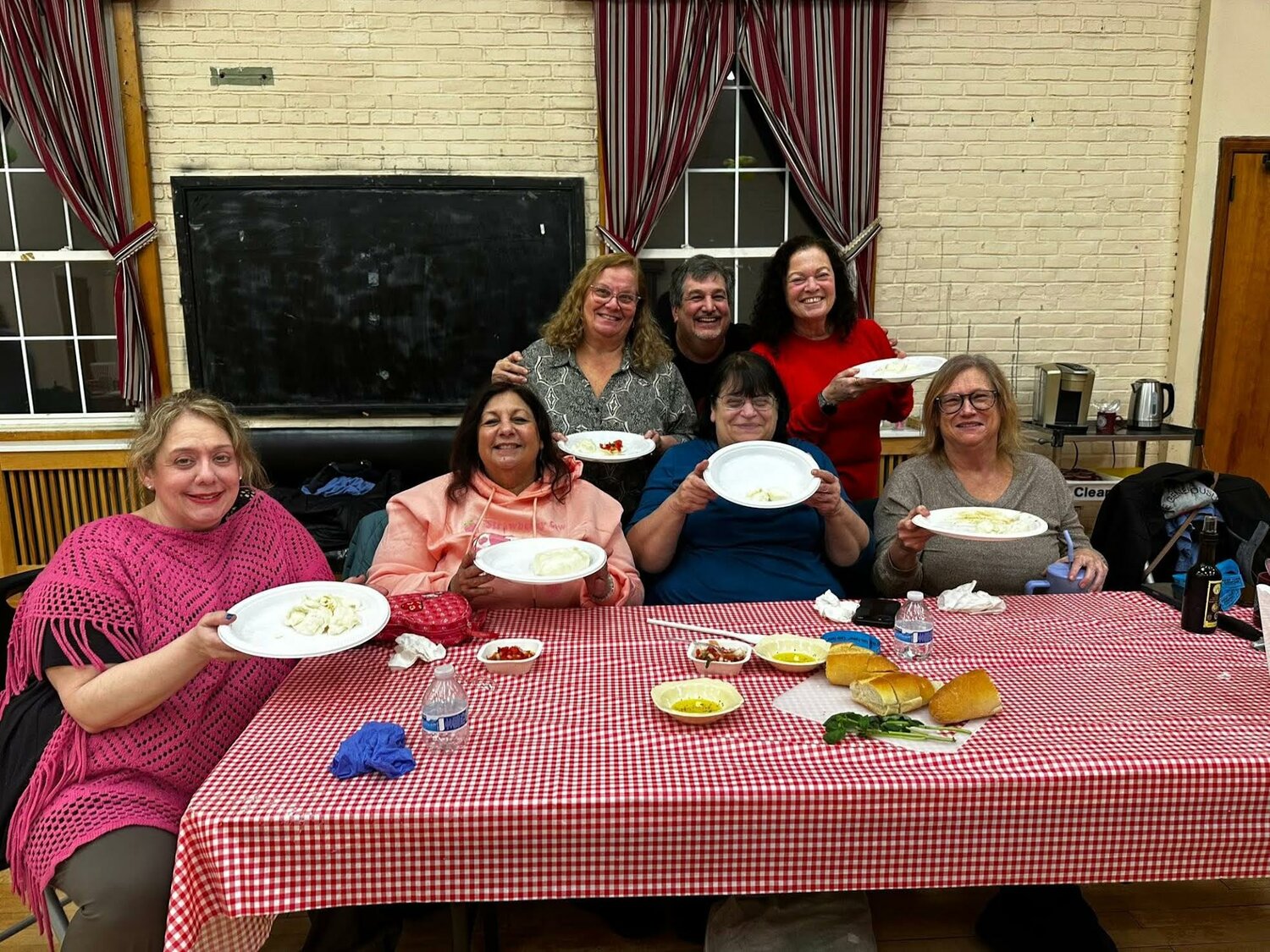
The aroma of warm milk and melted curd filled the fellowship hall at Oceanside Lutheran Church on Saturday as more than two dozen residents gathered to learn an old-world craft with a local twist — how to make fresh mozzarella by hand.
Leading the class was Peter Cuccio — the church’s president and Oceanside resident with deep roots in the restaurant industry — who has turned a lifelong love of food into one of the church’s most popular community outreach events.
“I’ve always liked cheese,” Cuccio said. “It’s great to bring places, and it’s always better fresh and warm.”
Cuccio’s connection to mozzarella dates back decades. His grandparents opened a family restaurant, Sal’s Wander Inn, in Baldwin around 1950, and he later became one of the original owners. Though he now works as a nuclear medicine technologist at Mercy Hospital, food has remained a constant thread in his life.
“In the ‘90s, I remember everybody started getting fresh mozzarella — in every butcher and every Italian grocery store,” he said. “A friend once invited me to Pastosa Ravioli in Oceanside to watch the cheesemakers at work. That was my first experience watching someone beat cheese.”
Cuccio originally informally taught friends the process, often bringing fresh mozzarella to parties.
“I’ve always loved to serve people in the restaurant,” Cuccio expressed. “And I also love to serve people here. To me, this is fun. It’s just like cooking in a restaurant — sharing my knowledge, sharing my stories and getting out there.”
The idea to formalize the class came in 2020, when church leaders discussed new ways to engage the broader community.
“Everybody says you can give in terms of money,” Cuccio said. “But you can also give in terms of skills.”
The first class, Cuccio noted, filled almost immediately. Since then, interest has remained strong, with sessions needing to be capped at about 25 participants to keep the experience manageable and hands-on.
“It gets out of control once you get over that number,” Cuccio said. “Since I’m teaching, I’m the only one with most of the knowledge, so it’s hard to get to everybody in there if there are too many.”
While Cuccio has made mozzarella completely from scratch, he explained that most small operations — including his class — begin with prepared cheese curd. Producing curd requires large quantities of milk and careful acid balancing, a technical process often handles closer to dairy farms.
“It takes a gallon of milk to make a pound of cheese,” Cuccio explained. “If we had to import that much milk just to make the cheese, it would be ridiculous.”
Funding support from Thrivent Financial for Lutherans, a not-for-profit financial services organization, helps offset costs. The church receives seed money to purchase roughly 80 pounds of curd per session — enough for participants to make cheese on-site and take some home.
Though the class teaches technique, Cuccio pointed out that it’s not meant to be overly strict.
“We’re not here to be very technical about every little aspect of it,” he said. “We want you to come make some cheese, eat some cheese, bring whatever food you want and have a good time.”
For many attendees, it’s as much a social event as a culinary lesson — particularly during the winter months, when options for a night out can feel limited.
“People are always looking for something different to go out and experience,” Cuccio said. “Instead of just going out to dinner, you can learn how to make some cheese.”
Beyond the mozzarella itself, Cuccio hopes participants walk away with confidence and connection.
“I’d like them to get an idea of what it is to make cheese and to be able to share that with their families,” he said. “Be the person that goes to a party and says, ‘Hey, I made some fresh cheese for you.’”
For Cuccio, the classes are also part of a larger mission. Having been a member of Oceanside Lutheran Church for more than two decades, Cuccio now serves as church president. Community events like the mozzarella class showcase another side of church life, he said, one rooted in fellowship and service, and one that he sees as an extension of both his culinary heritage and his faith.
“In churches these days, there’s generally a tendency toward less and less people attending,” Cuccio said. “It’s not all just praying and going to church. It’s camaraderie. It’s people getting together, people that care about each other and people doing things for each other in the community.”
As participants stretched and shaped their cheese, the event reflected Cuccio’s goal: bringing neighbors together through food, fellowship and a shared, hands-on experience.


