
Thursday, October 1, 2026
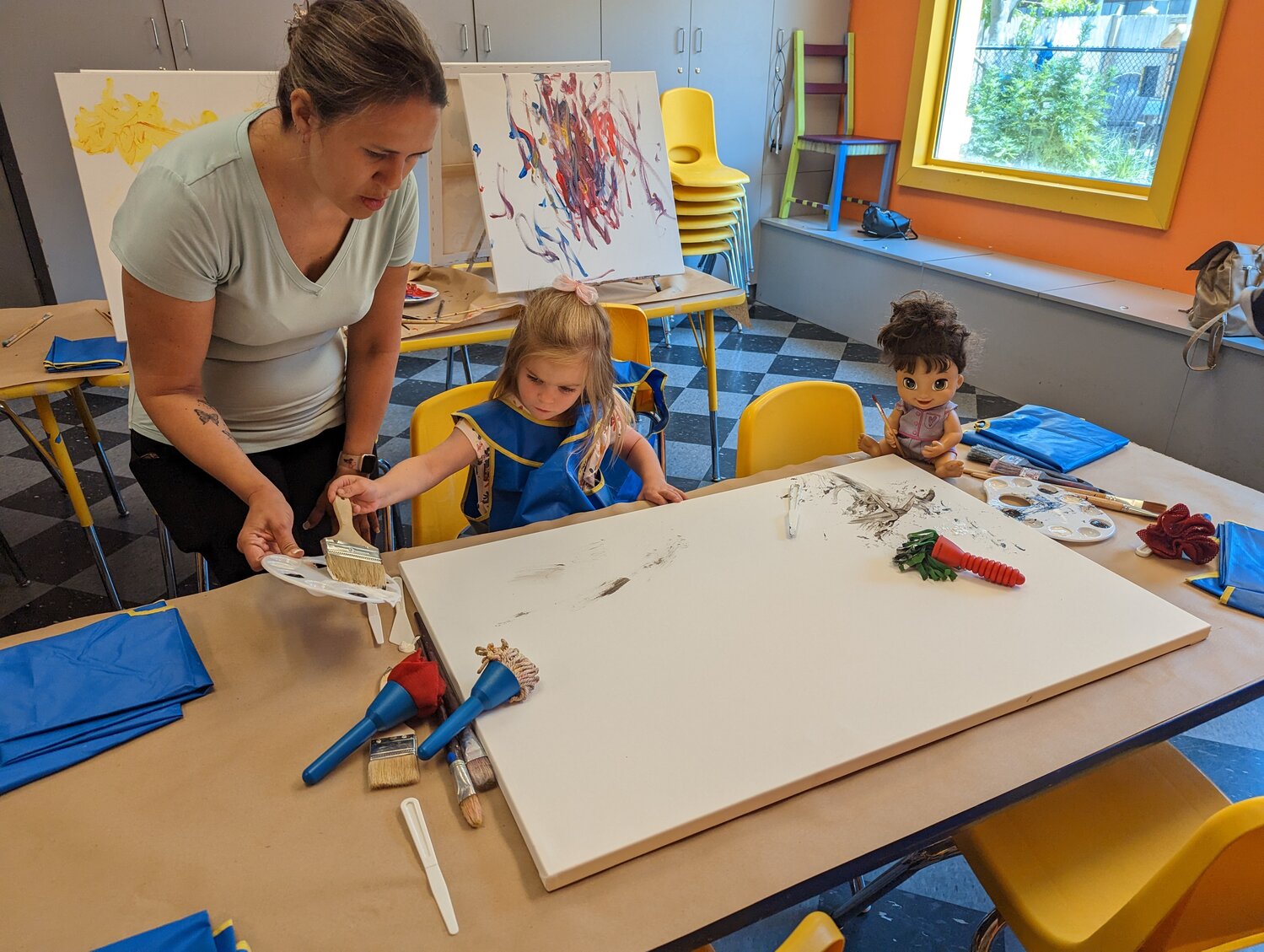


Long Island Children's Museum invites families to put down the screens this summer, pick up a paintbrush and discover the many ways to create art.
With the launch of Summer ArtVentures [July 7], the museum expands its arts programming into a season-long celebration of imagination, hands-on learning and creative exploration four days a week.
Whether it’s experimenting with watercolor, building collages, sculpting with clay or creating artwork inspired by professionals, every visit offers something new.
The lineup grew from a pilot series the museum introduced last summer. After seeing children return week after week and hearing families ask for more opportunities to create, museum educators decided it was time to think bigger.
“We had such a positive reaction, people were asking if we could do them on other days and if we could offer more arts programming,” says Jeanmarie Walsh Mansfield, the museum’s director of visual arts and community initiatives. ”We found families kept coming back, and kids were building on what they learned from one week to the next.”
That enthusiasm inspired a full calendar of art experiences running throughout July and August, with activities designed to appeal to toddlers, school-age children, teens and even adults. Unlike traditional art classes, participants aren’t divided by age. Instead, everyone creates together in the same space, allowing each person to work at a level that’s comfortable while learning from one another.
“It’s sort of like an old-school classroom,” Mansfield says. “Kids of all ages learn with and from each other.”
Each Tuesday, the museum hosts Imagine That! Summer ArtVentures Workshops, where participants explore a different artistic medium or technique. One week may focus on collage, while another introduces mosaics, sculpture or animation. Before children begin creating, participants are introduced to artists whose work connects to that week’s project.
Some come from centuries ago, like Italian painter Giuseppe Arcimboldo, whose portraits famously transformed fruits, vegetables and other everyday objects into imaginative faces. Others are contemporary artists such as Octavio Ocampo, whose optical illusion paintings encourage viewers to look beyond first impressions.
“I want kids to learn that art can be much more than they think art is,” Mansfield says. “Art can be everywhere and made from anything. All you need is your creativity, your imagination and a willingness to experiment.”
Fridays offer Watercolor Wonder Pop-Ups, rotating through different galleries with new watercolor techniques and themes each week. One session explores the effects of salt on watercolor paint, while another teaches children how oil pastels and watercolor interact to create surprising results. Other activities draw inspiration from nature, encouraging families to experiment with flowers, color and texture.
On Saturdays, Amethyst Playground Pop-Up connects directly to the current Artists’ Corner exhibition by Kelly Olshan. Families transform leftover materials from the artist’s creative process into colorful magnets, demonstrating how everyday objects can become works of art.
For children who love getting their hands dirty, Squish Studio, running July 27 through 31, offers an entire week devoted to clay. Young artists can experiment with different tools, create personal sculptures and contribute to a collaborative creature that grows throughout the week.
Clay holds a special place for Mansfield.
“I’ve been wanting to do clay-based workshops for a long time,” she says. “Kids really respond to it. It’s intuitive, it’s hands-on, and it helps develop fine motor skills while encouraging creativity.”
The aim is for visitors leave with more than artwork to hang on the refrigerator.
Creating art helps children build confidence, develop critical-thinking skills and become more comfortable taking creative risks, Mansfield explains. Working alongside others also teaches collaboration, communication and problem-solving.
“Art making reduces anxiety,” she says. “It can be meditative. We know screens can increase anxiety, but when children are creating with their hands, they’re engaged, they’re present and they’re learning.”
Perhaps most importantly, art teaches children that mistakes aren’t something to fear.
You fail sometimes,” Mansfield says. “You make something and it doesn’t come out the way you wanted. That’s an important life skill — mistakes are learning opportunities and that you can pivot and try something different.”
And the experience sparks curiosity. Rather than providing step-by-step instructions with one “correct” outcome, educators encourage children to ask questions, explore materials and decide for themselves what they want to create.
“There’s no wrong way to make art,” Mansfield says. “I want kids to push their boundaries and realize they’re artists.”
And this is only the beginning.
Museum leadership plans to further expand programming beyond the summer, with additional workshops during school breaks and perhaps a future art festival that celebrates creativity throughout the museum.
Until then, paint, sculpt, squish and create all summer — one colorful adventure at a time
For schedules, admission and registration information, visit licm.org.


