
Thursday, October 1, 2026
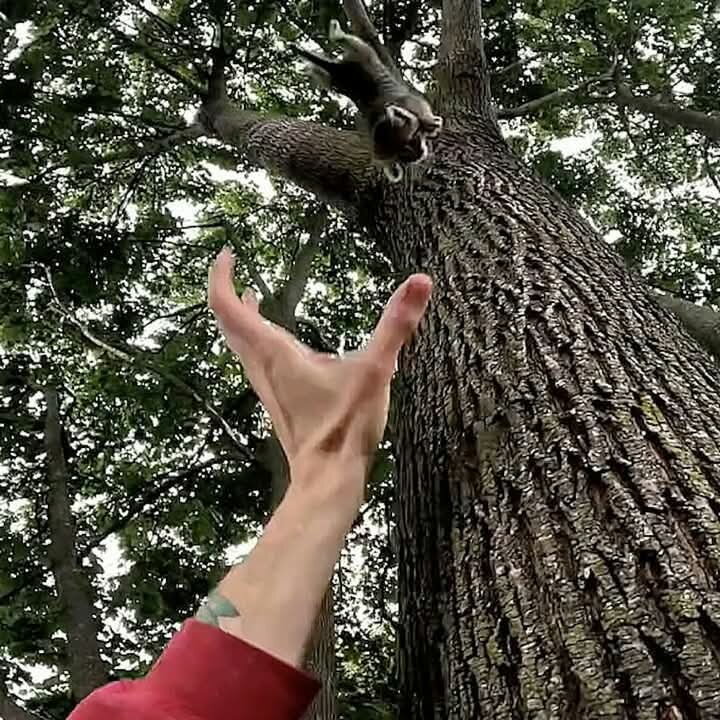
For most Long Islanders, spotting a goat wandering along Ocean Parkway near Jones Beach would be enough to leave them reaching for their phones. For John Debacker, it was simply another day on the job.
When reports came in earlier this month of an abandoned goat near the busy roadway, Debacker answered the call. The rescue quickly made headlines, but for the former Seaford resident, it was just the latest chapter in a mission that has consumed much of his life: helping animals in distress.
For the past 16 years, Debacker has built a reputation as one of Long Island's go-to volunteer animal rescuers. Whether it's a kitten trapped in a storm drain, a raccoon tangled in a soccer net, a turtle stranded along Wantagh Parkway or a cat clinging to life near Long Island Rail Road tracks, his phone is often one of the first to ring.
"I just like to see animals safe and in a new home," Debacker said. "That's what keeps me going."
Now 33, Debacker began rescuing animals as a teenager after helping stray cats in his neighborhood. Word of his willingness to respond spread quickly through local communities and eventually across social media, where residents, police departments and fellow rescuers now regularly tag him when an emergency arises.
"I think my name just got out there," he said. "People know they can reach out."
There is no such thing as a typical day.
Some weeks are relatively quiet. Others are filled with back-to-back emergency calls involving everything from cats trapped inside car engines to wildlife caught in fencing or netting.
In fact, while speaking with the Herald, Debacker had just finished rescuing a raccoon that had become tangled in a soccer net.
It's why one of his biggest pieces of advice for homeowners is simple: Put sports nets away when they're not being used.
"They can become dangerous for wildlife," he said.
Debacker works closely with police departments, animal control officers and other rescuers throughout Nassau and Suffolk counties, responding wherever he's needed. Highway rescues, he said, are among the most dangerous because frightened animals can dart into traffic without warning.
"The highway rescues are always more difficult," he said. "You have to approach every situation very slowly and very cautiously."
Despite the unpredictable nature of his work, Debacker said he has learned that staying calm is often the most valuable tool he carries.
"I always stay calm so the animal has a better chance of being saved," he said.
His vehicle is stocked with traps, rescue nets, cat food, flashlights and powerful spotlights — equipment that allows him to adapt to almost any emergency. Rather than following a strict plan, he evaluates each scene as it unfolds, looking first at potential dangers before deciding the safest way to reach an animal.
"A lot goes through my head," he said. "I look at the danger aspects and figure out the best way to approach the situation."
Among the many rescues he's performed, one still stands above the rest.
Earlier this year, Debacker helped rescue Garfield, an injured orange cat that had been struck by a train and stranded near Long Island Rail Road tracks. The dramatic effort temporarily halted rail traffic as rescuers worked to safely retrieve the animal.
"It was definitely rewarding," Debacker said. "There was a lot of danger involved."
Although many of his rescues have attracted television cameras and thousands of views online, Debacker said social media's greatest value isn't the attention — it's the speed at which people can find help.
"Before social media, people didn't know who to reach out to," he said. "Now someone can make a post on Facebook or Instagram, and people can connect with someone who can help."
That increased awareness, he believes, has also strengthened partnerships with local agencies.
"The police have been much more helpful lately," Debacker said.
While he declined to discuss details surrounding the goat rescued near Jones Beach because of an ongoing investigation, he said one message deserves to be heard.
"There's no reason to abandon an animal," he said. "There are always resources to help."
For residents who encounter an animal in distress, Debacker encourages them not to simply drive by.
"Call a local shelter or someone who can give you the right number," he said. "Don't just ignore an animal in distress."
Most of his work is done on a volunteer basis. He doesn't charge for emergency rescues, relying instead on donations and support from the online community that has grown around his work. A small network of fellow volunteers occasionally assists him on larger rescues, but many calls are answered by Debacker alone.
His availability rarely changes.
"I'm always ready to go," he said.
After 16 years, hundreds of rescues and countless hours spent responding to emergencies across Long Island, Debacker said the mission remains as simple as it was when he started.
"I never let an animal just suffer," he said. "I always make sure I reach my goal."


