
All parties now appear eager to end the bruising battle between the Village of Atlantic Beach and the barrier-island branch of the worldwide Chabad movement.
“All we have been after is to be a good member of this community,” says Jeremy Dys, an attorney with the Texas-based religious-rights organization that represents Chabad of the Beaches. “It’s in everybody’s interest to be tolerant.”
But tolerance was in short supply when the village moved in 2021 to block Chabad from opening an outreach center at the foot of the Atlantic Beach Bridge. Using the mechanism of eminent domain, the village seized the property Chabad had purchased, along with an adjacent vacant lot owned by a local family.
The Hasidic sect then sued the village, complaining that its First Amendment religious-freedom rights were being violated. Chabad cited prejudiced statements made by a few village officials and residents. A federal District Court judge ruled in Chabad’s favor in September 2022.
A year later, the village agreed to pay Chabad $400,000, and to allow the group to move forward in converting a former Capital One bank building into a religious facility. The federal court had stipulated, meanwhile, that the village had to approve zoning variances sought by Chabad. But last October, the Atlantic Beach zoning board denied all but one of several requested variances. Chabad then vetoed the 2023 settlement.
Protracted negotiations ensued, with Atlantic Beach bargaining from a weak defensive position. Chabad held the option of hauling the village back into federal court. Such a move would have cost Atlantic Beach much more than the $710,000 it has already paid five law firms involved in the eminent domain cases. In addition, the village could have wound up paying Chabad multiples of the $400,000 agreed on in 2023.
A new deal was announced on July 1, with Atlantic Beach paying Chabad $950,000. That settlement was contingent on the zoning board accepting the relevant terms at its scheduled July 17 meeting.
With all current costs taken into account, the village has spent $2.8 million on the eminent domain conflicts. None of this was inevitable, but it’s also not surprising.
Although it claimed to have seized the properties in order to build a community center, the village was clearly acting in response to fears that Chabad’s presence would alter the character of the community. Then-six-term Mayor George Pappas probably reasoned — probably correctly — that many of his constituents wanted to keep Chabad out of Atlantic Beach. (Pappas, who resigned the day after the settlement was announced, declined to comment.)
With 1,700 year-round residents and several second or third homes occupied only in summer, Atlantic Beach is an affluent, homogenous, conservative enclave that bars outsiders from using its beaches. The village, a stone’s throw from Queens at its western end, is more than 96 percent white. Hardly any voices were raised in support of Chabad’s First Amendment rights and in opposition to the village’s insularity.
At the same time, there was considerable dissatisfaction with the costly way in which Pappas and village trustees fought the Chabad battle. That discontent was exacerbated by an 87 percent local property tax hike announced in April. One-third of that whopping increase is a product of the eminent-domain disputes.
Residents’ desire for a new political dispensation was made manifest in the June 17 election for two of the five seats on the village board. The top vote-getter was Joseph Pierantoni, the candidate most outspokenly critical of the village’s performance. Another challenger was also elected, while the sole incumbent seeking re-election was soundly rejected.
Pierantoni and the two other current board members, Barry Frohlinger and Laura Heller, all pledged at a July 7 meeting to conduct village affairs in a more transparent, communicative and fiscally prudent manner.
Will comity prevail now that the Chabad melee is almost over? Are Atlantic Beach residents going to evince tolerance for a group that has offered little in the way of compromise during the long-running battle? Is peace at hand, or is it only a ceasefire?
Much will depend on how Chabad operates its programming center and the food and beverage drive-through that will be part of it. Will Chabad allay neighbors’ concerns about traffic, parking and noise?
Chabad’s local opponents may harbor feelings too raw to permit an open accounting of motives, tactics and blame. But such a self-assessment may eventually have to take place in order for genuine closure to be achieved.
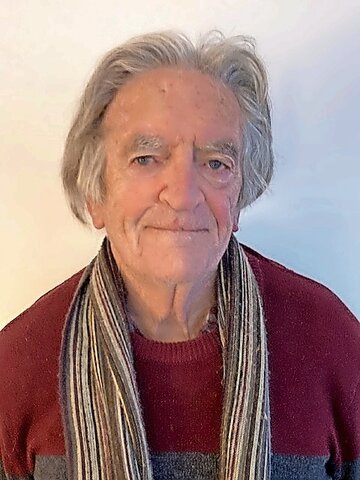
Kevin J. Kelley, of Atlantic Beach, is a retired journalist and journalism professor.


