
Wednesday, October 21, 2026

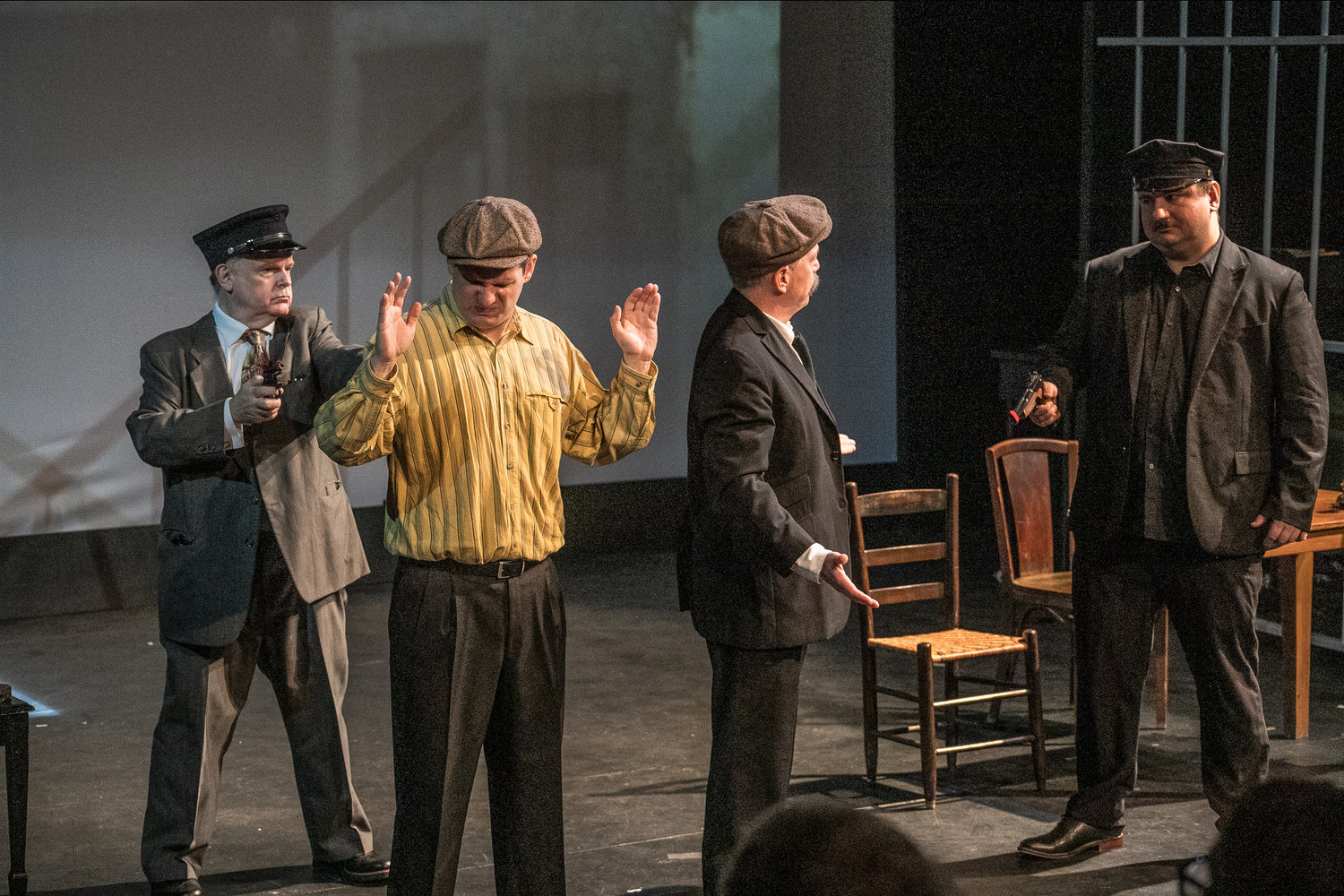


If you ask Valley Stream opera composer Leonard Lehrman how he crafted his grand American opera, “Sacco and Vanzetti,” he’d tell you he finished what Blitzstein started over 40 years ago.
The late opera composer Marc Blitzstein had an ongoing fascination with one of the most controversial episodes in American history: the trial and execution of anarchists and Italian immigrants Sacco and Vanzetti. Both were charged with committing robbery and murder at the Slater and Morrill shoe factory in South Braintree in 1920.
Since then, the trial has been widely considered by historians as unfair for its shoddy police evidence and the court’s ethnic prejudice against the two men.
Blitzstein’s fascination spurred him to take the duo’s story on stage through his eponymously named opera — a dream of his that would ultimately be cut short when he was murdered in Martinique in 1964.
Afterward, the opera languished for years, according to Lehrman, mainly because many composers found his source material too scattered and incomplete to work with. They refused to pick up where Blitzstein had left off.
Lehrman, a celebrated composer in his own right, still hadn’t given up hope, however. For years, he simmered with the idea of one day bringing the opera to completion. It wasn’t until a pivotal 2000 trip to the Italian small town of Torremaggiore, the birthplace of Nicola Sacco, where he was inspired to write the musical climax of the opera.
“As we were passing the gorgeous Cliffs of Amalfi on the train, in the summer of 2000, when we visited the families and graves of Vanzetti in Villafalletto in the north and Sacco in Torremaggiore in the south, it dawned on me that the names of those two hometowns of theirs would fit the music Blitzstein's "The Hills of Amalfi" beautifully.”
At Torremaggiore, Lehrman and his wife and longtime collaborator Helene Williams met Fernanda Sacco, Nicola Sacco’s now-late niece, who immersed the couple in the history of the case. She even escorted them to her handmade stone memorial monument dedicated to her uncle and Vanzetti.
“Fernanda had engraved in stone, the Italian translation of the exoneration statement made by Massachusetts Governor Michael Dukakis. He exonerated Sacco and Vanzetti in 1977 on the 50th anniversary of their deaths,” said Lehrman. The opera debuted a year later in 2001 in a solo piano version at The White Barn Theatre in Westport, Conn.
“Leonard has called me ‘the midwife’ of this opera,” Williams said. “When it came time to audition for The White Barn Theatre, I sang all the female roles as well as some of the male ones. In the 2001 premiere performance at The White Barn, I sang two very different roles: the bigoted wife of the garage owner and the defense committee secretary.
“Due to my long-time involvement with the score, I of course knew it better than any of the other singers, all of whom were new to the production. This intense work is not only beautiful and thrilling, but meticulous in its historical accuracy.”
The opera, divided into two parts, naturally evolved out of themes by Blitzstein who based his libretto on transcripts, interviews, and letters from the principals involved in the case, giving the opera a “documentarian” quality. Having his Italian trip come full circle, Lehrman made one final addition by placing Dukakis’ exoneration at the end of the work.
It would be several years later, this September in fact, before the full opera premiered at the Lehman College Studio Theatre in the Bronx, directed by Bronx Opera General Director Benjamin Spierman. Lehrman conducted the 20-member cast and 27-piece orchestra.
The project, commissioned by the Ford Foundation, optioned by the Metropolitan Opera, and presented by After Dinner Opera Company, will make a virtual revival. A fully edited and subtitled version of the opera in its New York orchestral premiere will be streamed live on Zoom from the couple’s music coaching school, Court Street Music in Valley Stream on Oct. 30.
“We spent more than $6,500 on the video and editing it,” said Lehrman. “And we have the best segments from each of the two performances at Lehman stitched together.”
Many movies and books have sought to tackle the subject of Sacco and Vanzetti, but Lehrman believes opera is the medium best to express the story.
“Blitzstein did years of research on this, and the story is so operatic as to demand it,” Lehrman said. “We can’t wait to share it with audiences worldwide.”
Have an opinion about Lehrman's grand Ameican opera? Send an email to jlasso@liherald.com.


