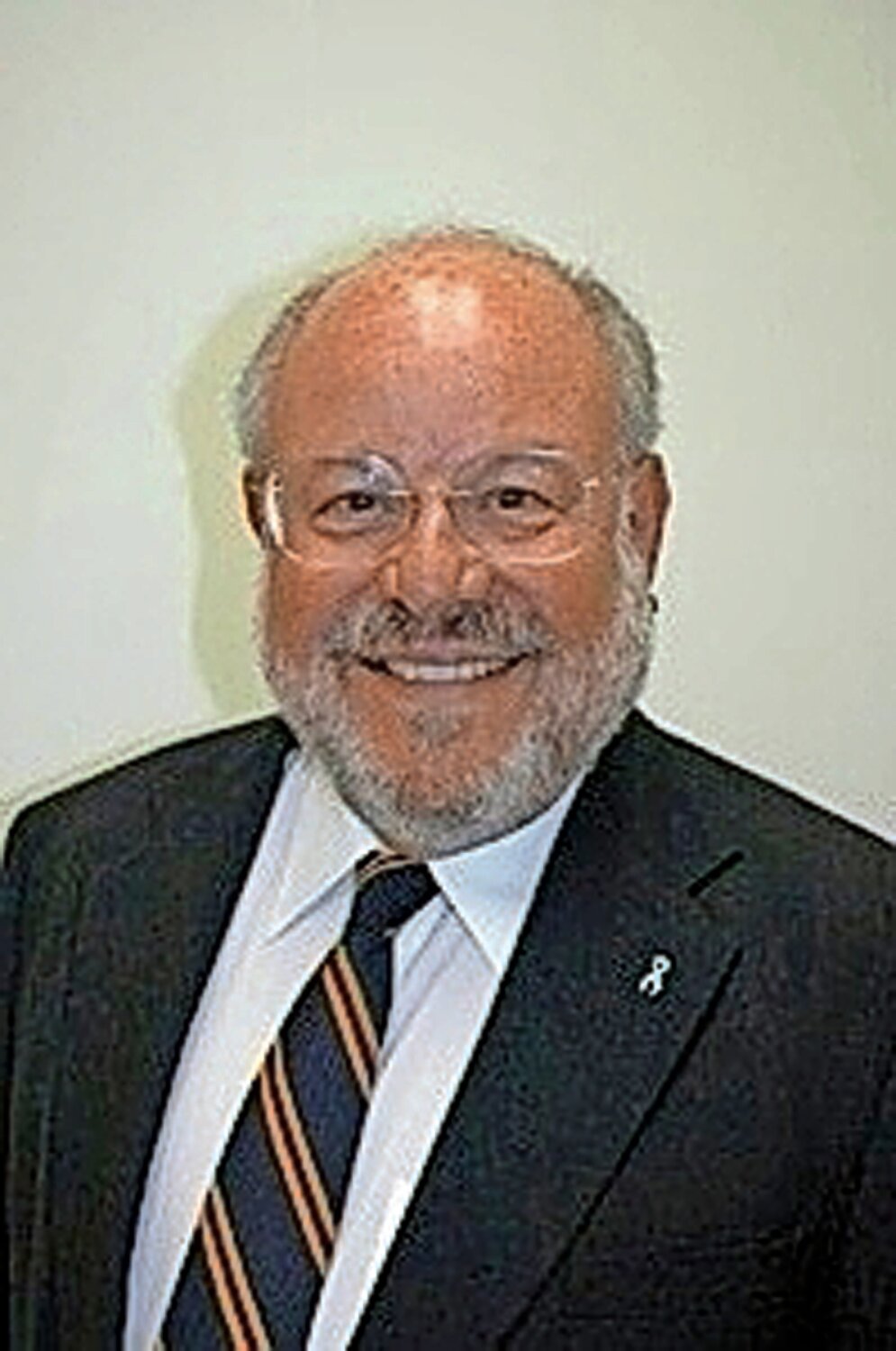
By Karl Grossman
I was the main speaker at the gathering just held in Bellport in commemoration of the atomic bombings 80 years ago of Hiroshima and Nagasaki. It was organized by the South Country Peace Group and co-sponsored by other religious institutions and peace organizations.
The threat of nuclear war has long been a focus of mine. For 20 years I was a member of the Commission for Disarmament Education, Conflict Resolution and Peace sponsored by the United Nations and the International Association of University Presidents. I went regularly to its meetings at the U.N. in New York, and traveled the world on behalf of the commission and gave presentations.
Long Island has had a significant role in the history of atomic weapons. It was from his summer residence in New Suffolk in 1939 that Albert Einstein sent the letter to President Franklin Roosevelt that brought about the creation of the Manhattan Project. The year before, in Nazi Germany, the atom was first split. The letter from Einstein, a refugee from Hitler and the Nazis, read: “This phenomenon would … lead to the construction of bombs, and it is conceivable … extremely powerful bombs of this type may thus be constructed.”
The Manhattan Project was formed to fight fire with fire, because the U.S. to develop atomic weaponry. In the end, Einstein regretted what he had encouraged with that letter. “If I had known that the Germans would not succeed in constructing the atom bomb, I never would have moved a finger,” he wrote in his 1950 book “Out of My Later Years.”
I am of a generation especially impacted by the threat of nuclear war. In grade school in Queens, we were issued dog tags to enable identification after an atomic war, and “duck-and-cover” exercises were conducted routinely.
The first resolution of the U.N., when it was initially based in Lake Success in 1946, called for “the elimination from national armaments of atomic weapons.”
In my talk, I emphasized the current U.N. effort to abolish nuclear weapons. The Treaty on the Prohibition of Nuclear Weapons was passed in 2017, with 122 nations voting in favor. Its passage was attributable in large part to the work of the International Campaign to Abolish Nuclear Weapons, which, as a result, received the Nobel Peace Prize.
The treaty declares that because of the “catastrophic humanitarian consequences that would result from any use of nuclear weapons, and recognizing the consequent need to completely eliminate such weapons, which remains the only way to guarantee that nuclear weapons are never used again under any circumstances,” nations agree not to “develop, test, produce, manufacture, otherwise acquire, possess or stockpile nuclear weapons” or “threaten” their use.
A big problem: The so-called nuclear weapons states including the U.S., Russia, China, France and Great Britain have not signed on to it. ICAN is calling on people to get these nations to agree to support the treaty.
Nuclear war is closer than it’s ever been, in the judgment of the Bulletin of the Atomic Scientists. In January, it moved its Doomsday Clock and sent out an announcement headed, “Closer than ever: It is now 89 seconds to midnight.” The Bulletin defines midnight as “nuclear annihilation.”
“In 2024, humanity edged ever closer to catastrophe,” the announcement began, and “despite unmistakable signs of danger, national leaders and their societies have failed to do what is needed to change course. Consequently, we now move the Doomsday Clock from 90 seconds to 89 seconds to midnight — the closest it has ever been” since it was created in 1947.
Can the atomic genie be put back into the bottle? Anything people have done, other people can undo, especially if the reason is good. And the prospect of massive loss of life from nuclear destruction is the best of reasons.
In my presentation, I pointed to a precedent: the outlawing of poison gas after World War I, when its terrible impacts were tragically demonstrated. Chlorine gas, mustard gas, phosphene gas killed many on both sides of the war. The Geneva Protocol of 1925 and the Chemicals Weapons Convention of 1933 outlawed chemical warfare, and to a large degree the prohibition has held.
Likewise, nuclear weaponry can — and should — be outlawed.
Carl Grossman has been an investigative reporter in a variety of media for more than 50 years. He is a professor of journalism at the State University of New York at Old Westbury whose courses include investigative reporting and environmental journalism.