By Robert A. Scott
The intrusions into the governance and operations of the University of Virginia, George Mason University, Harvard and Columbia, among others, by federal and state officials contradict U.S. Supreme Court precedent and undermine the integrity of higher education.
The White House and the Department of Justice threaten the withholding of federal research funds as leverage to force changes in who is admitted, who teaches and what is taught. They accuse institutions of being silent in the face of antisemitism; ignoring presidential orders limiting diversity, equity and inclusion initiatives; and violating the Supreme Court’s decision on affirmative action in Students for Fair Admissions v. Harvard. In addition to reductions in federal funding, the government has threatened to limit the enrollment of international students and the employment of international scholars.
These actions, based on unproven allegations and without due process and respect for the law, expose the vulnerability of colleges and universities, despite Supreme Court decisions including Dartmouth College v. Woodward (1819) and Sweezy v. New Hampshire (1957). Both decisions affirmed that universities must remain free from government interference in their teaching, hiring, admissions and governance. Institutional autonomy and board independence are fundamental to academic freedom, educational excellence and the fulfillment of fiduciary duties, the court affirmed.
The attacks against universities elsewhere should raise concern on Long Island. We are home to 15 colleges and universities, and all rely on federal funding for student financial aid. Some have substantial research agendas. Stony Brook University, for example, is a major recipient of federal research grants, which totaled over $16 million in 2023. Adelphi, Cold Spring Harbor Laboratories, Hofstra, Long Island University, New York Institute of Technology and Northwell Health, among others, also have active research programs that rely on government grants. Earlier this year, Newsday reported that the new federal budget could reduce research funding on Long Island by over $163 million for medical, science, technology and other projects.
Key federal agencies providing research funding for Long Island institutions include the Department of Health and Human Services, the National Institutes of Health, the Department of Defense, the National Science Foundation, the Department of Energy, NASA and the Department of Education.
Like universities elsewhere, ours are governed by boards of trustees that are responsible for preserving institutional independence, academic freedom and free speech, all necessary for teaching and scholarship that challenges assumptions and assertions. Surprisingly, fewer than 15 percent of American college and university trustees have any professional experience in higher education, which underscores the need for rigorous orientation in academic governance and mission. Can we imagine a public company saying its directors did not know its legal landscape, finances and markets?
Public university trustees are mostly appointed through a political process, although some states allow public elections, and most independent college and university trustees are selected with consideration given to their philanthropic capacity. Neither are generally selected for their governance acumen or knowledge of higher education.
Nevertheless, the duties of trustees are threefold: care, loyalty and obedience.
The duty of care: Board members must prepare diligently, participate actively and protect the institution through appropriate oversight, including guarding against external interference. Trustees need to know the difference between governance and management, and questions and prescriptions.
The duty of loyalty: Board members must act in good faith and in the best interests of the institution, not out of self-interest or in the interest of a particular constituency.
The duty of obedience: Boards must uphold the institution’s charter and mission, maintaining public trust through honest stewardship.
Each institution has a covenant with the public that gives it a charter, its major asset. The faculty may be the heart and students the soul, but the license to award degrees and certificates is what gives the institution stature, credibility, relevance and viability. That is what trustees hold in trust as guardians of the institution.
Trustees are most effective when they know the history, mission and purpose, the students, local community and the comparative advantages of the institutions they serve. This is vital not only for the health of the institution but also to maintain the standards of independence that have been the hallmark of U.S. higher education. As a former university president and trustee, and as a member of PEN America’s Champions of Higher Education, I believe it is my responsibility to speak out on behalf of our institutions, our students and our country’s future.
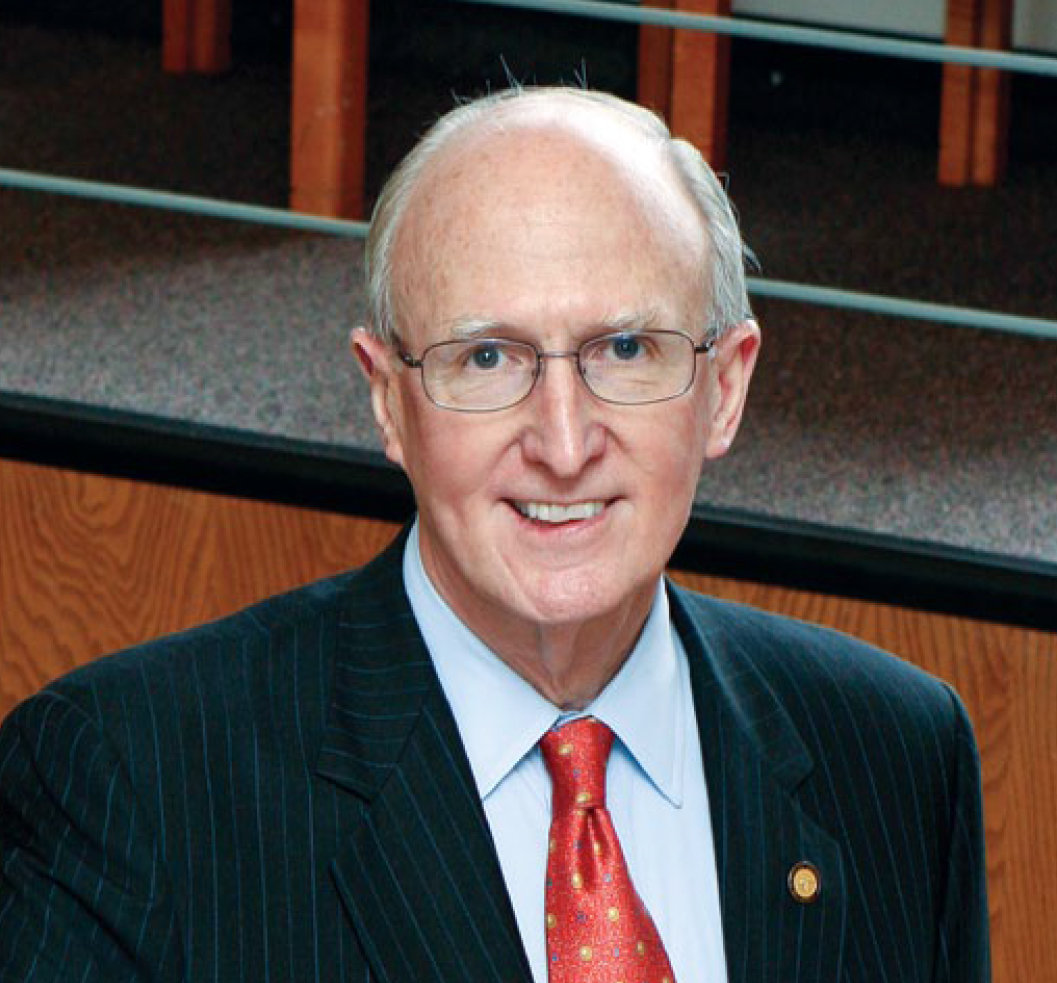
Dr. Robert A. Scott is president Emeritus of Adelphi University and Ramapo College of New Jersey, and the author of “How University Boards Work.”