
For years now, travelers arriving at John F. Kennedy International Airport have been greeted by the same familiar promise: “Welcome to the new JFK.” The signs have been up so long that they have become part of the landscape — much like the cranes, barricades, detours and relentless construction that surround the airport.
As mayor of the Village of Lawrence, and as a neighbor living directly under JFK’s flight paths, I believe it is time to ask a difficult but necessary question: What is the true return on investment for the billions of dollars being poured into JFK?
The Port Authority of New York and New Jersey deserves credit for recognizing that our region’s airports must evolve. Modern terminals, improved passenger experiences and updated infrastructure are all worthwhile goals. But return on investment is not measured by glossy renderings or ceremonial ribbon cuttings. It comes from logical, strategic investments that increase capacity, efficiency and long-term value for travelers, bondholders and surrounding communities.
JFK sits on a finite piece of land. No matter how much money is spent, that reality doesn’t change. You can rebuild terminals and redesign interiors, but you can’t create additional runways or meaningful airspace without pushing the limits of safety and sustainability. There is only so much traffic — in the air and on the ground — that this airport can realistically handle.
Anyone who has attempted to access JFK knows this firsthand. Traffic congestion in and around the airport is constant, and worsening. Roadways are perpetually snarled, exits shift without warning, and what should be a short trip becomes an hour-long ordeal. Even after enduring that congestion, travelers are met with another frustration: aggressive curbside enforcement that treats drivers like obstacles rather than customers. Families unloading luggage are barked at, harassed and threatened if they don’t remove their bags and passengers in what feels like 15 seconds. This isn’t efficiency — it is dysfunction masquerading as order.
These ground-level problems highlight a larger truth: Despite billions in investment, the basic experience of getting in and out of JFK has not improved. In some ways, it has become worse. When infrastructure spending fails to reduce congestion, increase capacity or improve usability, we must question whether the investment itself is misguided.
For neighboring communities like Lawrence, Cedarhurst and municipalities throughout the Town of Hempstead, the costs extend far beyond inconvenience. Constant overhead flights mean constant noise. Homes shake. Conversations pause. Children are awakened early. Seniors endure relentless disturbance. Local governments across the South Shore have repeatedly raised concerns about noise pollution, health impacts and declining quality of life. These are not abstract complaints — they are daily realities.
Is it healthy for families to live under nonstop air traffic? Is it safe for densely populated communities to bear the burden of increasingly concentrated flight paths? And is it fair for entire municipalities to absorb the environmental and emotional costs of an airport that physically cannot expand but continues to intensify operations?
From a financial perspective, pouring billions into an already constrained facility raises serious concerns. Bondholders deserve investments that generate real, scalable returns. Taxpayers deserve infrastructure that works. If capacity is capped by geography, then future growth is marginal, at best. That is not a sound long-term investment strategy.
A better return on investment — both financially and socially — would come from bold thinking, not endless renovation. The Port Authority should be investing those billions in the planning and development of a new airport, located where expansion is possible and modern aviation demands can be met without sacrificing established communities.
A new airport would provide more land, more runways and more flexibility. It would reduce pressure on JFK, LaGuardia and Newark airports while creating a more balanced and resilient regional aviation system. Most important, it would reflect an understanding that true ROI considers quality of life, public health, safety and efficiency — not just construction budgets.
Communities like Lawrence are not anti-progress. We understand the importance of aviation to our regional economy. But progress shouldn’t come at the expense of the people who live beneath it. After years of construction and decades of intensifying traffic, it’s time to recognize that rebuilding the same airport again and again is not innovation.
Sometimes, the smartest investment is not fixing what is already overstretched, but building something new, where it actually belongs.
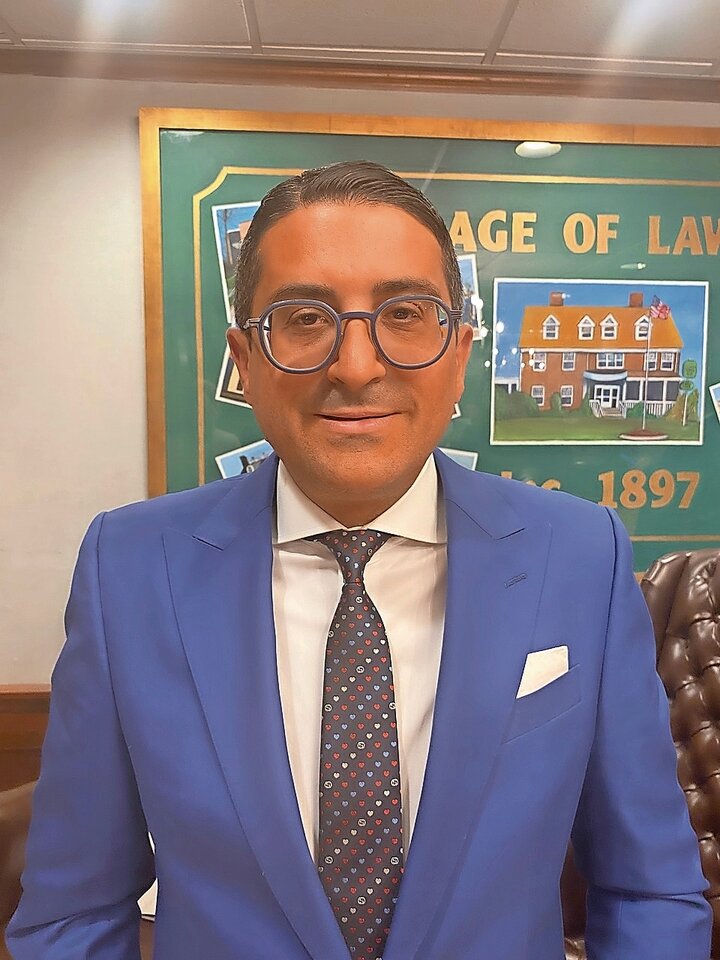
Samuel Nahmias is the Mayor of the Village of Lawrence.


