
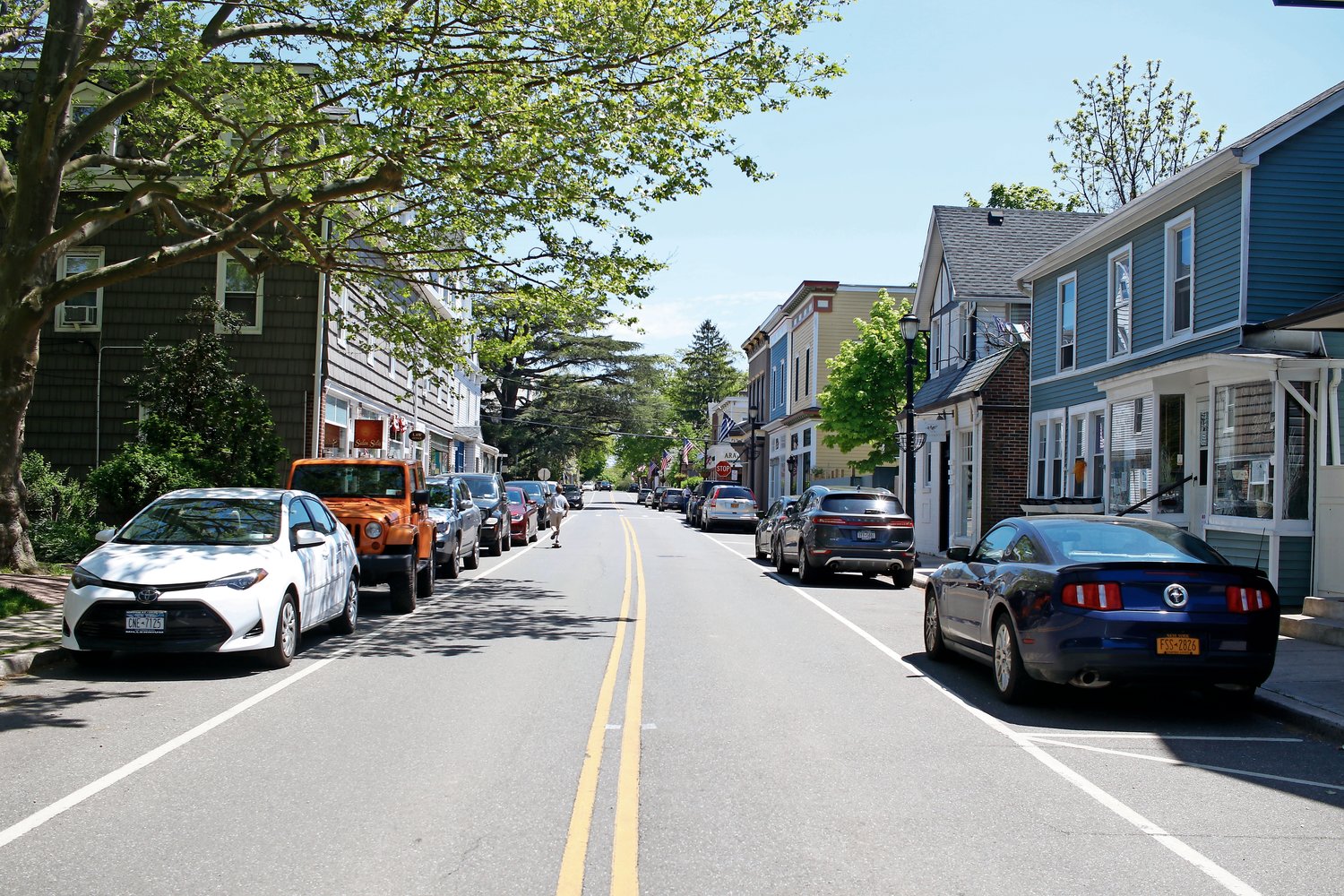
The Village of Sea Cliff took another step toward a planned village-wide reduction of the speed limit to 25 mph on Monday night, as Traffic and Safety Committee Chair Dan Flanzig briefed trustees on the legal framework, the ongoing grant-funded study and rationale behind the proposal.
Flanzig, a village resident and personal injuries lawyer, told the Board of Trustees that a 2022 amendment to state law, Assembly Bill A1007A, gave local municipalities new authority to set their own speed limits on village-owned roads, provided a qualifying study is completed. Prior to that change, villages were constrained by state and county rules unless they sought special permission.
Flanzig said that requirement helped shape the village’s application for a federal Safe Streets for All, or SS4A grant, which is funding a comprehensive safety study being conducted by engineering firm NV5. One of his priorities during the request for proposals process, he said, was ensuring the study would be sufficient to support a speed-limit reduction if the village chose to move forward.
“The goal here now is to lower the speed limit village wide to 25 miles an hour,” he said. “Any roads that are not village roads default to the county speed limit, so we can’t touch that.”
He added that municipalities across New York State and the country have already adopted similar limits, including villages, cities, and suburban towns.
Several trustees and village officials asked questions about and discussed enforcement and public compliance, noting that police cannot always patrol every street. Flanzig acknowledged that reality but argued that a village-wide reduction would still have value.
“I also think at the end of the day, the biggest quality of life issue is traffic,” he said. “This is the first step. I think it’s consistent with long-term planning.”
Trustees also discussed the possibility of additional traffic-calming measures, including speed humps, raised tables and narrowed roadways. Village Administrator Bruce Kennedy noted that while such tools are used elsewhere, they have been difficult to implement in Sea Cliff in the past because of drainage concerns, driveway spacing requirements, and potential liability.
“It’s an exposure issue,” he said. “The county has had speed bumps losing control of the vehicle, hitting people, property and other cars, and suing the county.
Mayor Elena Villafane echoed the need for a careful, comprehensive approach, stressing that no action will be taken until the full draft of the NV5 report is reviewed.
“We don’t want to take any piecemeal action,” Villafane said in a subsequent interview. “We really want to take a look at the entire draft and then come up with it, take from that what is appropriately actionable.”
Villafane said the village expects to receive the first draft of the study in February, with revisions and clarifications extending into March. No vote on a speed-limit change has been scheduled.
Following the meeting, Flanzig said the effort to slow traffic in Sea Cliff predates the current grant by many years and reflects long-standing resident concerns, particularly along heavily traveled routes.
“Living on Prospect, which is one of the main offenders, is kind of what got me involved,” he said. “We’ve been working on a multitude of issues over the last eight or nine years.”
He explained that the Safe Streets for All grant provided the first real opportunity to comprehensively study speeds, crashes, and roadway conditions across the village. NV5, he said, relied on a mix of publicly available crash data, county information and speed studies conducted for other projects, including Shore Road.
Flanzig described the proposed speed-limit change as relatively inexpensive, noting that the primary costs would involve signage rather than construction. He also emphasized that Sea Cliff’s low rate of serious crashes should not be a reason for inaction.
“Thank God, the fatalities are extremely low or nonexistent in the village,” he said. “But the goal is to keep it that way.”
Villafane said traffic has been a dominant issue in village governance and across Nassau for generations. During the meeting, she highlighted that Nassau County Village Officials Association, for which she serves as president, was originally founded in 1925 with the express purpose of addressing traffic issues.
Villafane framed the proposal as part of a broader effort to improve walkability and encourage residents to rely less on cars for short trips.
“We’re trying to assist people in that walkability by making streets safer, encouraging children to walk to school, hoping to cut down on traffic in and around the schools,” she said. “Less cars means less danger.”
Both Flanzig and Villafane emphasized the role of volunteers in pushing the initiative forward. The Traffic and Safety Committee, Villafane said, reflects a long tradition of resident involvement in village affairs.
“These people are giving up their time and their efforts and their thought process,” she said. “We’re truly fortunate as a community that our residents continue to come out and volunteer and give up their time to improve the lives of their own families and all those that live in the village.”
For more information on the project visit SeaCliffSafeStreets.com.


