
Thursday, October 1, 2026
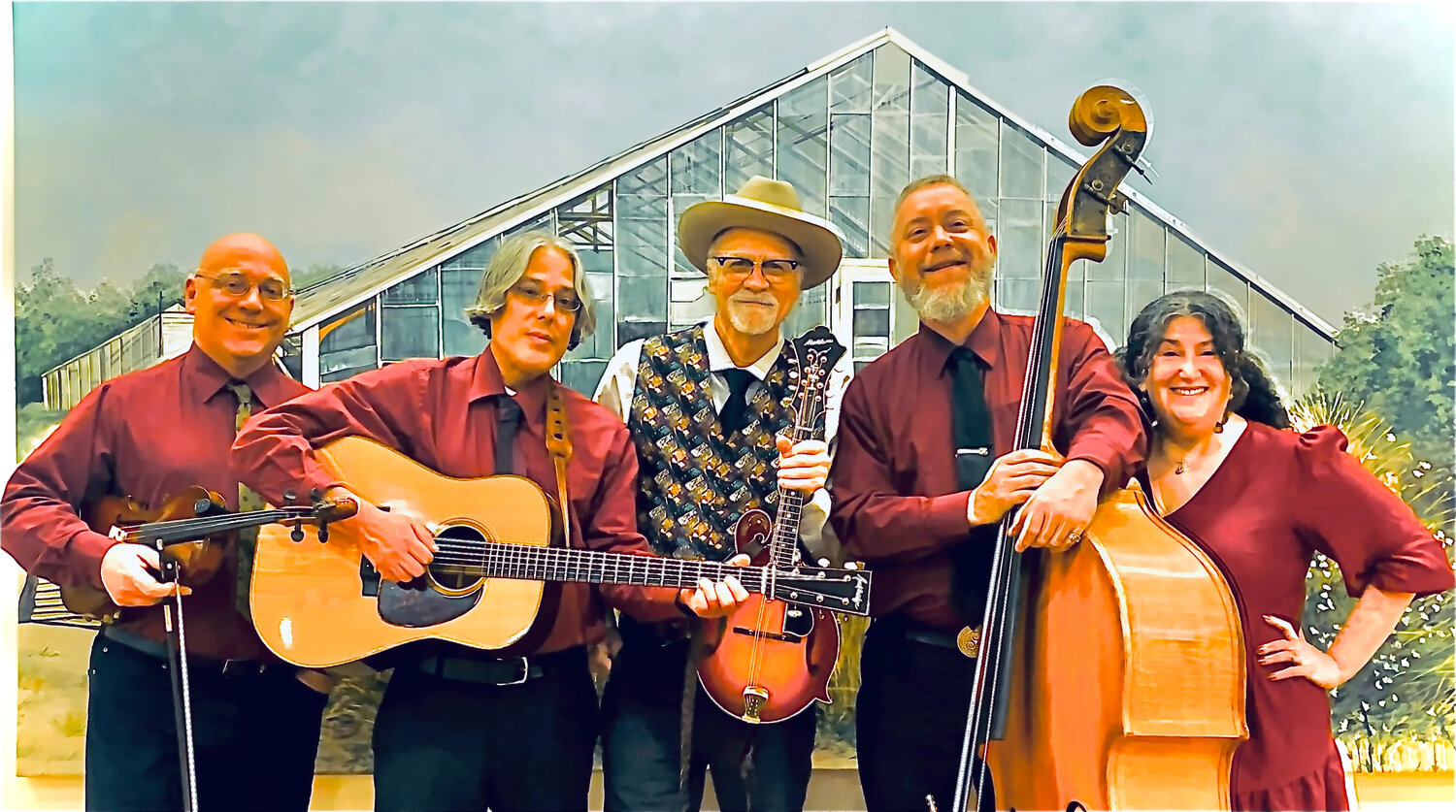
For bluegrass legend Buddy Merriam, the upcoming concert at the Seaford Public Library will be more than just another summer performance, ending a more than four-decade run with his band, Back Roads.
When the now 73-year-old Back Roads takes the outdoor stage June 27 at 7:30 p.m., the audience will be watching one of Long Island's most influential musicians perform one of the band's final shows after 45 years together.
"It's going to be emotional for me, really," Merriam said. "It's hard for me to imagine that it's over. But it's not over. It's just going on to something else."
Merriam formed Buddy Merriam & Back Roads in 1980, helping establish bluegrass music on Long Island at a time when the genre remained a niche interest in the region. Over the decades, the group became one of the longest-running bluegrass bands in the Northeast, performing throughout the country while building a devoted following at home.
His contributions to Long Island's music scene earned him the Long Island Sound Award from the Long Island Music and Entertainment Hall of Fame in 2015, recognizing his role in preserving and promoting the region's musical heritage. Since 1991, he has also hosted "Bluegrass Time" on WUSB 90.1 FM in Stony Brook, introducing generations of listeners to the music he loves.
"I'm proud of helping bluegrass stay alive and grow," Merriam said. "I've mentored people that have really gone on and done some good things in the business."
The decision to retire Back Roads was not driven by a desire to stop performing. Rather, Merriam said, the realities of managing a band in today's music landscape made it the right time to move in a different direction.
"Things have really slowed down since Covid," he said. "I'm not touring anymore, so I'm pretty much playing dates on Long Island."
Without a booking agent and with an increasing reliance on social media promotion, Merriam found himself spending more time on tasks he never particularly enjoyed.
Meanwhile, another passion continued to grow.
For years, he has been writing original music for the mandolin, the instrument that defined his career. Today, he estimates he has written more than 1,100 compositions.
"At this point in my life I have all this music I've written," Merriam said. "I'm trying to get it transcribed and archived."
That effort became even more important after health challenges several years ago forced him to think about what would happen to his life's work if it remained scattered across old cassette recordings and notebooks.
"I didn't want to go to my grave with all this stuff sitting around," he said. "It would just be gone forever."
The project has led Merriam to work with the Mandolin Heritage Association, a nonprofit dedicated to preserving mandolin music. Through the organization, hundreds of his compositions are being transcribed into written form and accompanied by instructional videos so future musicians can learn and perform them.
The preservation effort is also inspiring Merriam's next musical venture: the Long Island Mandolin Quintet. The ensemble features five musicians performing on members of the mandolin family, including mandolins, a mandola, mandocello and a rare mandobass. The group primarily performs Merriam's original compositions, giving new life to music he spent decades creating.
"As I go off into the sunset, I want to be playing my music with the quartet and the quintet," he said.
Much of that music was written on the same mandolin Merriam has played for more than four decades. Built for him in 1982 by world-renowned guitar and mandolin maker John Monteleone, of Islip, the instrument features a spruce top and curly maple back and sides.
The mandolin has survived nearly as much as its owner. After a head-on collision with an alleged drunk driver following a performance in Montauk, Merriam opened the instrument's case to find its top caved in. Monteleone rebuilt it, crafting a new top for the instrument.
"The mandolin was better than it ever was," Merriam recalled. "But at the time, it was troubling."
Merriam's own journey into bluegrass nearly ended before it truly began.
In 1976, while attending his first bluegrass festival in the Berkshire Mountains, he met Bill Monroe, the musician widely known as the father of bluegrass. Later that same day, Merriam was struck by lightning.
The strike stopped his heart, damaged his hearing and left him wondering whether he would ever play music again.
After recovering, he sought out Monroe and introduced himself once more. The encounter grew into a friendship and mentorship that would shape the rest of his career.
Monroe invited Merriam to perform at his famed Bean Blossom festival in Indiana and regularly shared musical advice and encouragement.
"I think he saw something in me," Merriam said.
One of Merriam's most cherished compositions, "Monroe Special," was written in honor of his mentor and remains a staple of his performances.
Despite the significance of the Seaford concert, Merriam insisted it’s not a farewell to music. He has already scheduled additional appearances, including performances with the Long Island Mandolin Quintet and other bluegrass projects.
The June 27 concert came together after library organizers learned Back Roads would be wrapping up its long run.
"They wanted to kind of get in on the last one," Merriam said with a laugh.
For audience members, the performance offers a chance to celebrate a musician whose influence extends far beyond the stage. For Merriam, it represents both an ending and a beginning.
After 45 years leading Back Roads, he is ready to focus on preserving the music that has defined his life and ensuring it continues long after the final encore.
"I always tell people I've had the most incredible life," Merriam said. "I'm the luckiest man in the world."


