


When Rabbi Jeffrey Gale stood before his Wantagh congregation in September 2001, he was facing what he called an “extraordinary situation.”
“Happened, what, 25 years ago, and it was a, it was a, it was a peculiar time,” Gale, 72, said in an interview with the Herald, reflecting on leading Suburban Temple — now Temple B’nai Torah — in the days following the Sept. 11 attacks. “I would like to define myself as an ordinary Rabbi that was thrust into an extraordinary situation and had to respond.”
Gale served the Wantagh synagogue from 1998-2009. Like many Long Island communities, Wantagh was home to commuters who worked in Manhattan. In the immediate aftermath of the attacks, Gale and his staff scrambled to organize a memorial service to comfort a shaken congregation — before they even knew whether they had lost anyone.
“We had to have some kind of a memorial service,” he said. “The purpose again, was to comfort the congregation as best we possibly can.”
They reached out to members, checked in with families whose loved ones had not come home, and gathered the community in prayer. The congregation lost one member in the Sept. 11 attack. Gale declined to share the individual’s name, citing confidentiality.
In the wake of the tragedy, he led multiple memorial services, including one attended by roughly 1,000 people. Presiding over the burial after remains were recovered, Gale explained, was the most challenging task he had to undertake in his career as a rabbi. “That was by far the hardest thing that I ever did,” Gale added.
But his work extended beyond his synagogue walls. Gale coordinated interfaith services with local clergy, visited classrooms to speak with children, and addressed rising Islamophobia in the months that followed.
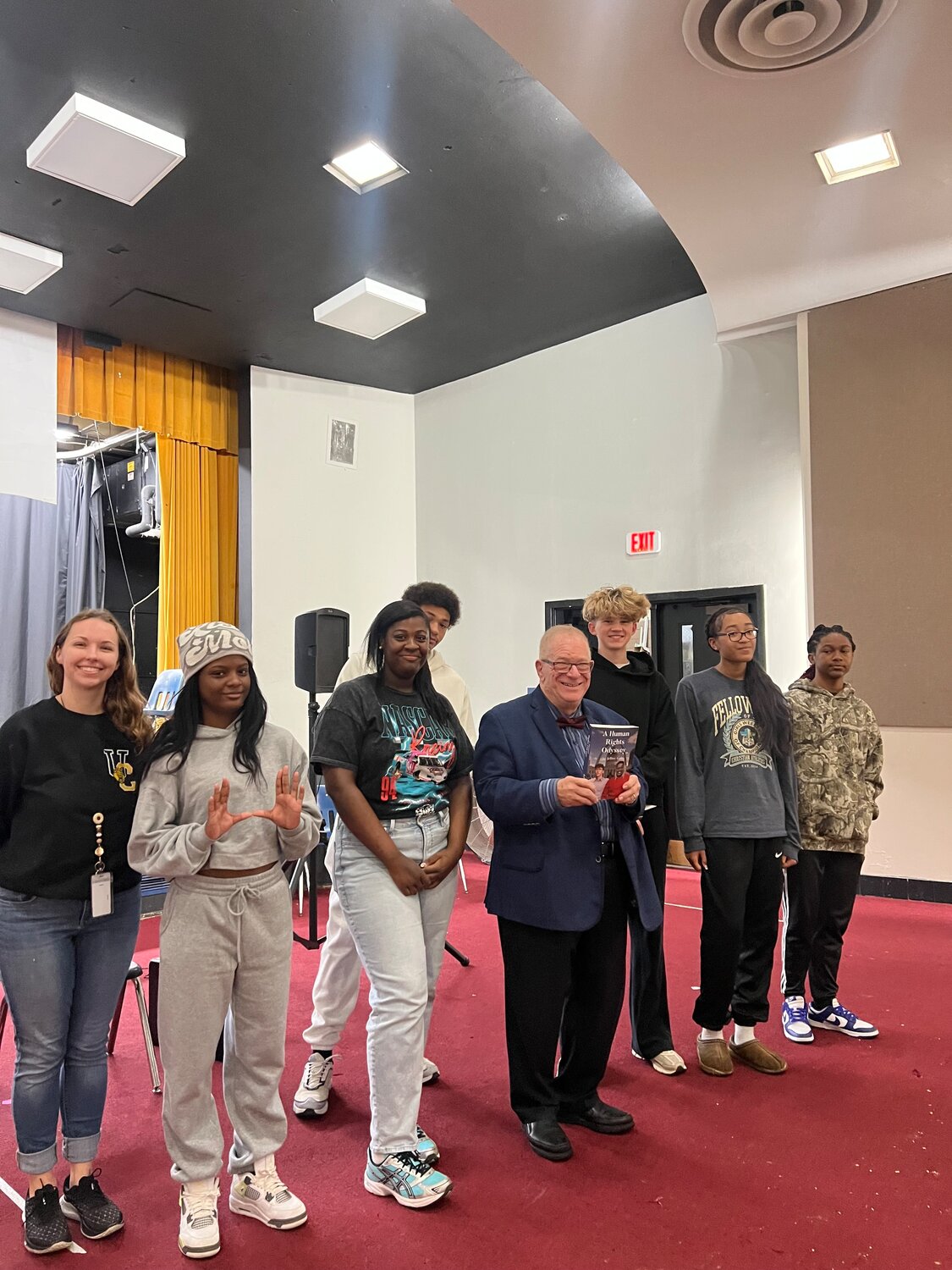
“We had to do something interfaith, because 9/11 didn’t just affect the Jewish community. It affected everybody,” he said. Years later, those experiences — along with decades of civil rights advocacy and interfaith work — became woven into his trilogy of novels, including his most recent, “A Human Rights Odyssey.”
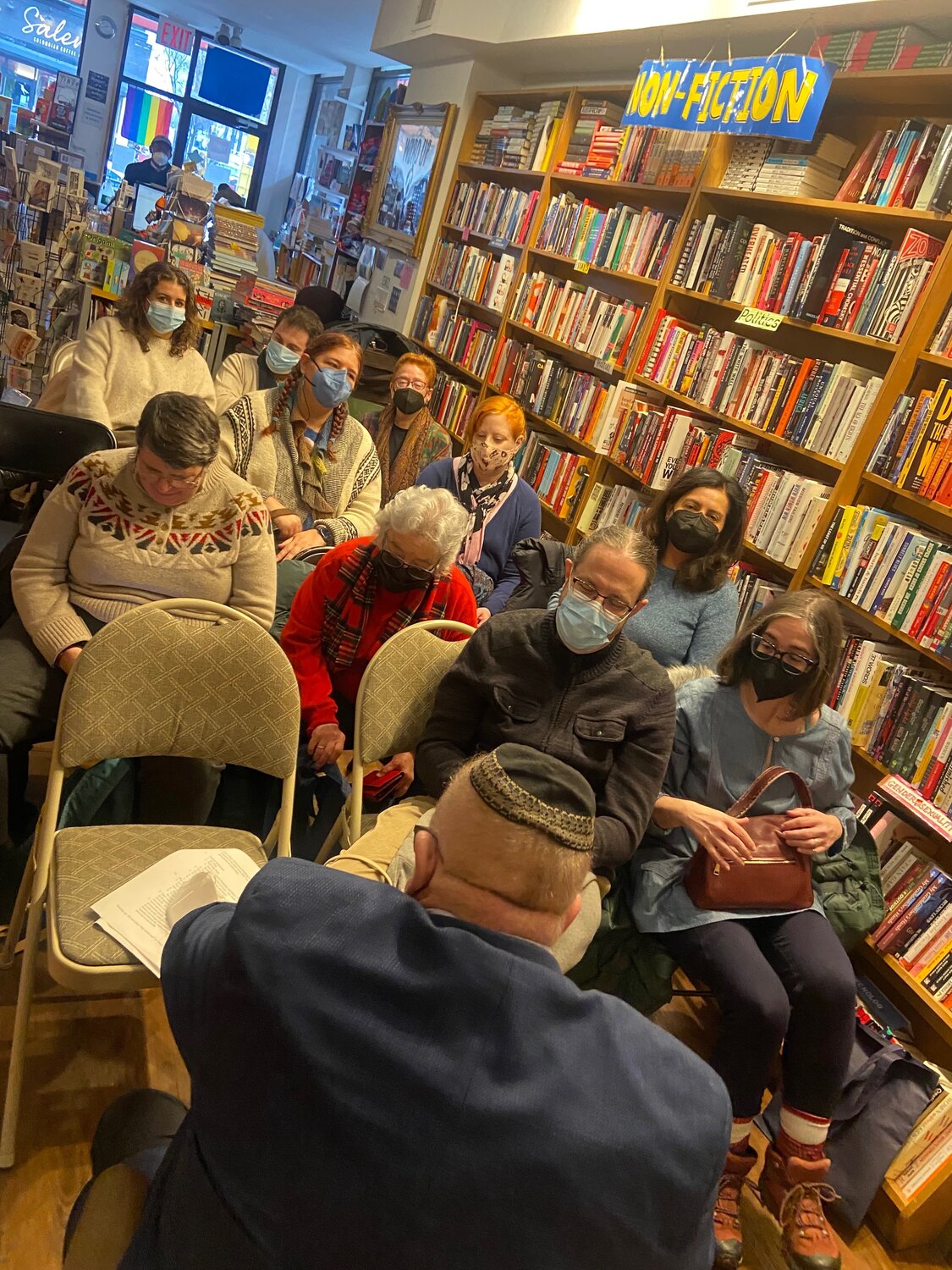
Gale recently discussed the book during a Martin Luther King Jr. weekend talk at Temple Beth Am of Merrick and Bellmore, drawing about 50 attendees despite inclement weather. Liz Gordon, co-president of Temple Beth Am, described the event as timely.
“He did a wonderful book discussion about this book that he wrote about civil rights,” Gordon said. “He’s a very good speaker.” The novel, which follows the fictional Rabbi Isaac Levin, draws from Gale’s real-life experiences — including his time in Wantagh after Sept. 11, his involvement in the Soviet Jewry movement in the 1980s, and later interfaith efforts in Washington Heights.
Howard Lev, a longtime congregant at Suburban Temple during Gale’s tenure there, said the themes transcend religion. “It’s not about just being Jewish or being Christian or being anything,” Lev said. “It’s about we are one together, and how to work together.”
Lev recalled Gale’s efforts to bring high school students together with peers from a local mosque in the years after Sept. 11 — a reflection of the same human rights values explored in his writing.
“If you look at the news, 24, 7, 365-day cycle,” Lev said, “it’s always prevalent. … The books bring that forward.” For Gale, the talk at Temple Beth Am — and an upcoming appearance at the Half Hollow Hills Community Library on March 11 — represent opportunities to continue conversations that began decades ago in Wantagh.
Martin Luther King Jr.’s influence permeates “A Human Rights Odyssey,” Gale said, from its civil rights-era references to its exploration of social justice. “It’s very much a Martin Luther King-type of a novel,” he said.
Though now retired from pulpit service after leading three New York synagogues between 1988 and 2022, Gale sees his writing as a continuation of his rabbinical mission. The challenges may evolve, but the call to respond remains. “I was thrust into the situation,” Gale said. “And basically, it was a matter of, can you Rabbi Gale jump to the pump?”


