By Abbey Salvemini
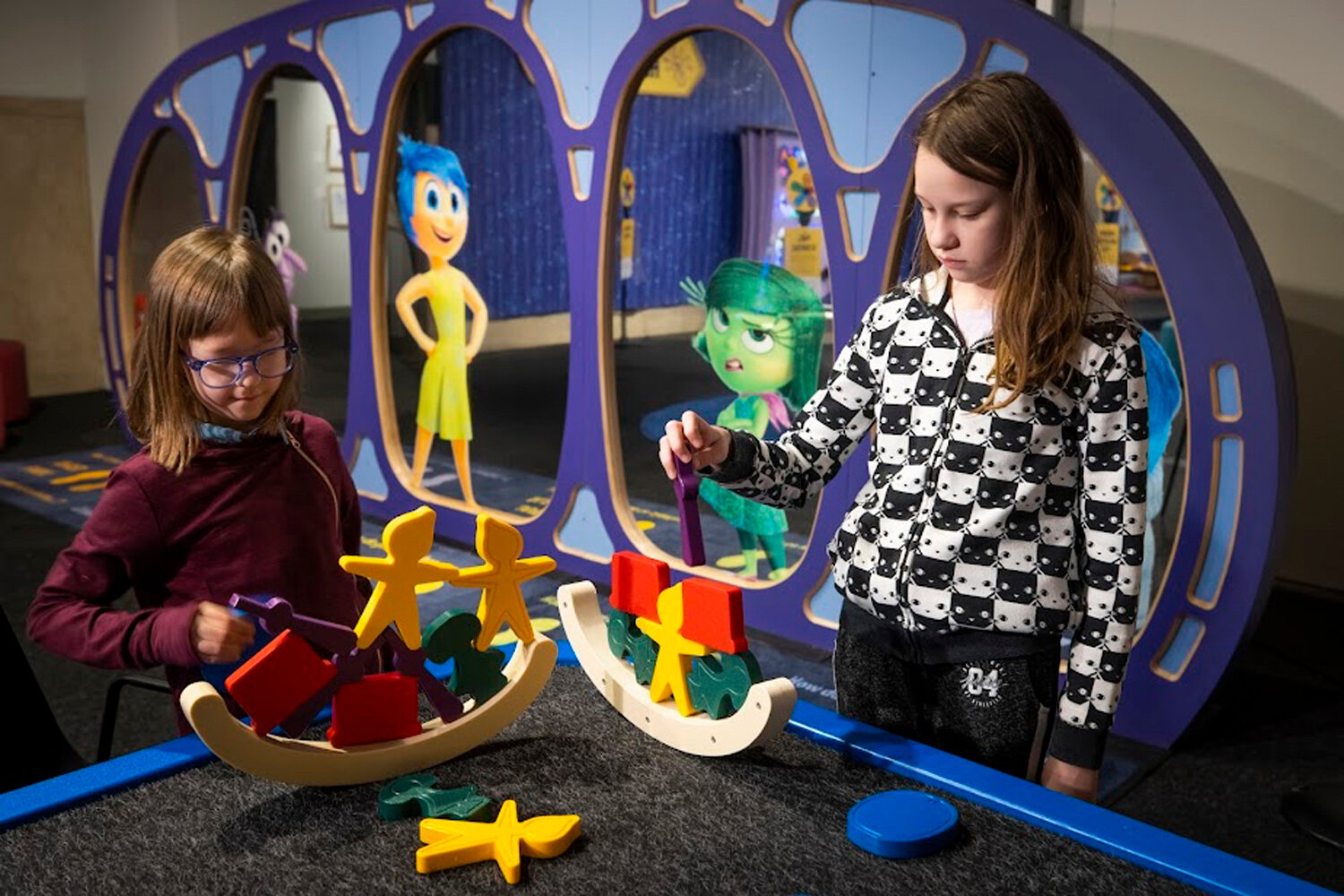
Joy, Sadness, Anger, Disgust, and Fear are in the spotlight. The vibrant world of Disney Pixar’s beloved film springs to life in “Emotions at Play with Pixar’s Inside Out,” a traveling, hands-on exhibit developed by the Children’s Museum of Pittsburgh. Now ensconced at Long Island Children’s Museum, the exhibition invites kids — and adults too — to step inside the film’s emotional landscape and explore how feelings shape the way we think, act, and connect.
Running through May 10, it blends play and learning to help young visitors understand the important role emotions, memory and imagination play in our everyday lives.
Designed to spark curiosity and conversation, the exhibit transforms familiar moments from the film into immersive learning experiences. Visitors can step into “headquarters,” create glowing memory spheres and experiment with how emotions interact through physical and digital play.
According to Margo Malter, the museum’s director of exhibits, the opportunity to bring “Emotions at Play” here is especially meaningful since it offers a playful way to interpret the movie’s ideas that resonate with children and families.
“All of the activities are very open-ended and hands-on, which is really what the museum is all about,” says Malter.
Transforming “Inside Out” into a hands-on learning experience required a thoughtful balance between storytelling and play. Rather than focusing on passive observation, it’s designed to invite children to actively engage with emotions. Developed in collaboration with Pixar Animation Studios, the exhibit features iconic set pieces directly inspired by the film.
Everyone will instantly recognize and gravitate toward the immersive recreations of scenes inspired by “Inside Out.”
At the Control Panel kids can pull levers and press buttons to explore the intensity of different emotions, while Emotions in Motion welcomes kids to place a memory sphere — just like in the movie — into a large, interactive machine.
Additional experiences deepen the emotional journey. Emotion Mirrors spring to life as guests step in front of them, triggering appearances by familiar “Inside Out” characters. At Range of Emotions, facial expressions are captured and identified on a screen, helping children connect expressions with feelings. A nearby writing station encourages reflection, inviting participants to choose colored paper that represents the emotions they want to express or explore.
From the vibrant color palette to the instantly recognizable environments, the installation captures the spirit of the film while staying true to the museum’s mission.
“For kids this age [2-10], it’s really about naming emotions and helping them give words to the feelings they are feeling,” Malter says. “Play is really the language of children and how they learn.”
Always, complementary programming enriches the exhibit experience. Children can create their own “memory orbs” inspired by the film or craft personalized “headquarters hats,” extending the themes of “Inside Out” beyond the gallery. Malter underscores the importance of hands-on creativity, noting the value of giving children the chance to make something tangible — an experience, and a keepsake — they can proudly take home.
At its heart, “Inside Out” delivers a powerful message: every emotion has value and a purpose. The exhibit brings that idea to life by creating a welcoming, judgment-free environment where children can explore feelings openly.
“This [exhibit] gives kids a safe space to have those conversations and for parents to give guidance,” Malter adds.
Ultimately, Malter hopes the exhibit does more than entertain for an afternoon — she envisions it as a catalyst for meaningful conversations that continue long after families leave the museum. By giving children age-appropriate tools to recognize, name and understand their emotions, the experience helps build emotional awareness and empathy at an early stage. Through hands-on activities and familiar characters, complex feelings are made accessible and relatable, encouraging children to express themselves with confidence. The result is an environment where learning feels intuitive, playful and engaging, while quietly reinforcing skills that support communication, resilience and healthy social development.
Building on the momentum of “Emotions at Play,” the museum will soon be rolling out an engaging lineup of family-friendly performances. In February and March, “Pete the Cat” arrives on its stage. Join the groovy blue feline and his pal Jimmy Biddle on an art-filled adventure that travels from New York to Paris, blending music, imagination and plenty of toe-tapping fun.
The excitement continues in April and May with the return of “Don’t Let the Pigeon Drive the Bus! The Musical.”
Based on Mo Willems’ wildly popular books and featuring music by Deborah Wicks La Puma, the high-energy production invites young audiences to follow the mischievous Pigeon in a lively, interactive theatrical experience.
Together, these performances — alongside the gallery exhibits that includie the newest permanent installation “Saltwater Stories” — offer families even more reasons to return. With a dynamic mix of theater, interactive learning and creative play, the museum continues to be a vibrant hub for discovery and family fun throughout 2026.