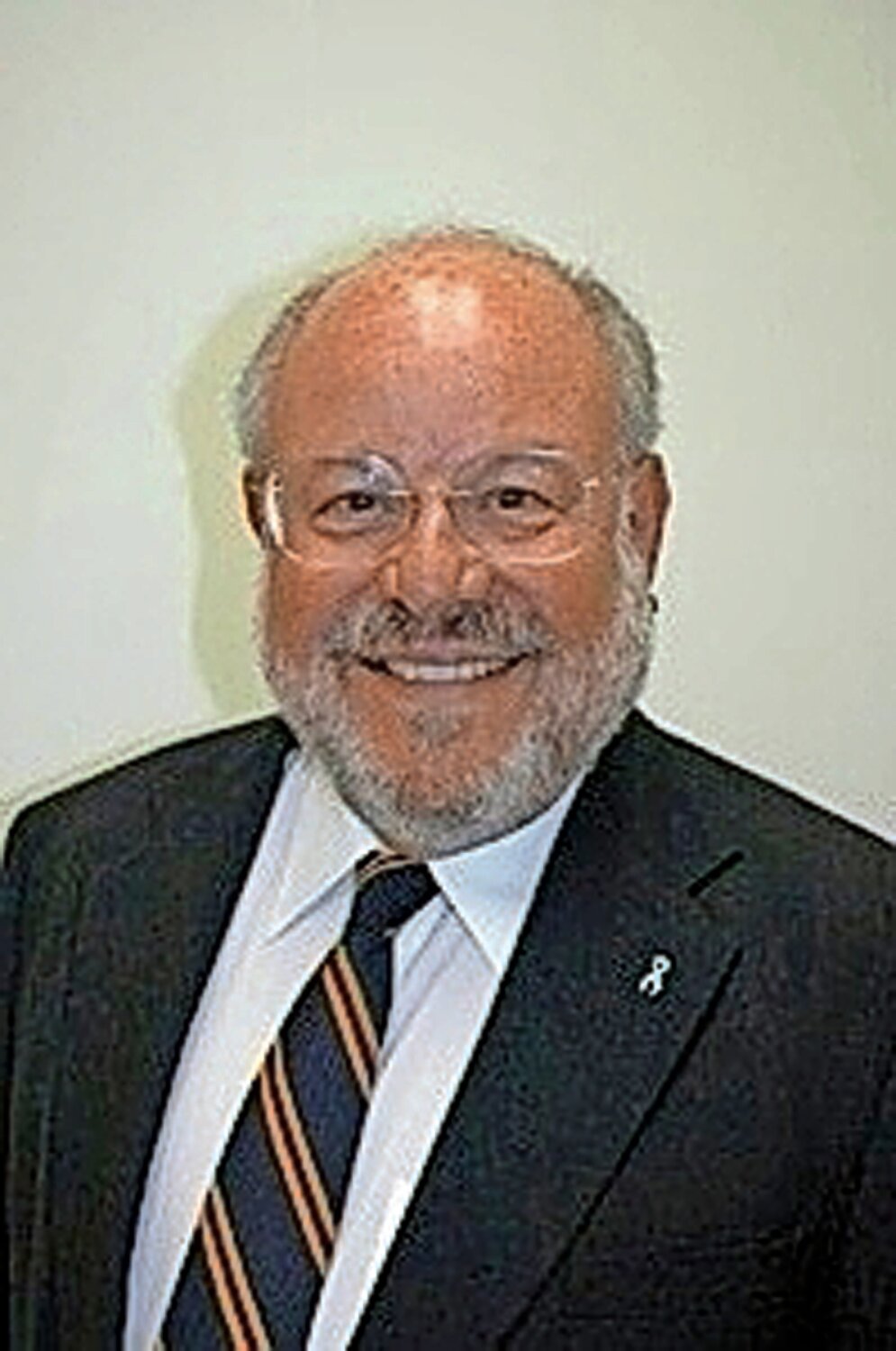
Karl Grossman
Herald file photo
Live long enough, and interesting things happen. I received the script last year of a play in which I’m a character. The play is called “Atomic Bill and the Payment Due.”
It is soon to have its premiere staged reading as a featured presentation in the 50th anniversary celebration of the establishment of the Peace Resource Center at Wilmington College, in Ohio.
It is by playwright and podcaster Libbe HaLevy, who spent 13 years writing it. She is already fielding requests for other presentations in the U.S. and overseas.
HaLevy has a long background in theater and as a playwright, with more than 50 productions of her plays and musicals, and a number of awards.
How did I get involved as a character in a play?
The play is described in its program notes as “a true story about media manipulation at the dawn of the Atomic Age and the New York Times reporter who sold his soul to get the story.” The reporter was William Laurence, a Pulitzer Prize-winning science reporter at The Times.
In 1945, General Leslie Groves, director of the Manhattan Project, arranged with Times Publisher Arthur Hays Sulzberger and Edwin James, its managing editor, to have Laurence secretly embedded in the Manhattan Project. He was the only journalist inside the crash program to build the first atomic bomb.
In his four months with it, Laurence witnessed the Trinity test of a nuclear device in New Mexico, and even wrote the press release for the Manhattan Project claiming that only an ammunition dump had exploded, and no one had been hurt. He had arranged a seat on the Enola Gay for its dropping of the first atomic bomb on Hiroshima, but missed getting on the plane — a big disappointment. But he did fly on a plane that followed the B-29 that dropped the second bomb on Nagasaki. When the war ended, Laurence wrote articles in The Times glorifying the Manhattan Project and promoting nuclear energy — ignoring the deadly impacts of radioactivity.
HaLevy has links not only with theater, but also with nuclear technology. She was staying in a house one mile away from the Three Mile Island nuclear power plant in Pennsylvania when it reported a meltdown in 1979. She authored a book on her experience. For the past 14 years she has hosted the widely aired podcast “Nuclear Hotseat.”
It was while working on a 2012 episode, focusing on the Trinity test and journalistic anomalies at it, that HaLevy called me for more information. I referred her to Beverly Ann Deepe Keever, who wrote the book “News Zero: The New York Times and the Bomb.” Keever, a longtime journalist, was a journalism professor at the University of Hawaii when she wrote “News Zero.”
In the book, she details how, in his stories for The Times, Laurence “served as a scribe writing government propaganda” to cover up the harmful effects of atomic bombs, radiation and radioactivity.
HaLevy did extensive research on Laurence. In “Atomic Bill” Laurence interacts with Australian journalist Wilfred Burchett, the first reporter to enter Hiroshima after the bombing, who traveled unescorted through the destruction “where Hiroshima used to be” and wrote an article headed “The Atomic Plague.” He exposed the lethal effects of radiation otherwise being denied by military authorities. It was published in the London Daily Express and elsewhere.
Articles by Laurence appeared in the month after the bombing on the front page of The Times, “Atomic Bill” relates, “for two full weeks in September 1945, ten articles, 20,000 words” and “use(d) the word ‘radiation’ only four times, not once mentioning its dangers.”
There are interactions between Laurence and Burchett and Edward Teller, the “father of the hydrogen bomb,” and J. Robert Oppenheimer. My character weaves through the play.
Tanya Maus, director of the Wilmington Peace Resource Center, says the play reveals the way in which individuals get caught up in the powerful forces of governments seeking to produce false narratives to gain public support for nuclear weapons use and development, and leads the audience “to reflect upon its own assumptions about nuclear weapons and nuclear power and their continued destructive impact today on human lives in the United States and throughout the world.”
Karl Grossman has been an investigative reporter in a variety of media for more than 50 years. He is a professor of journalism at the State University of New York at Old Westbury whose courses include investigative reporting and environmental journalism.