

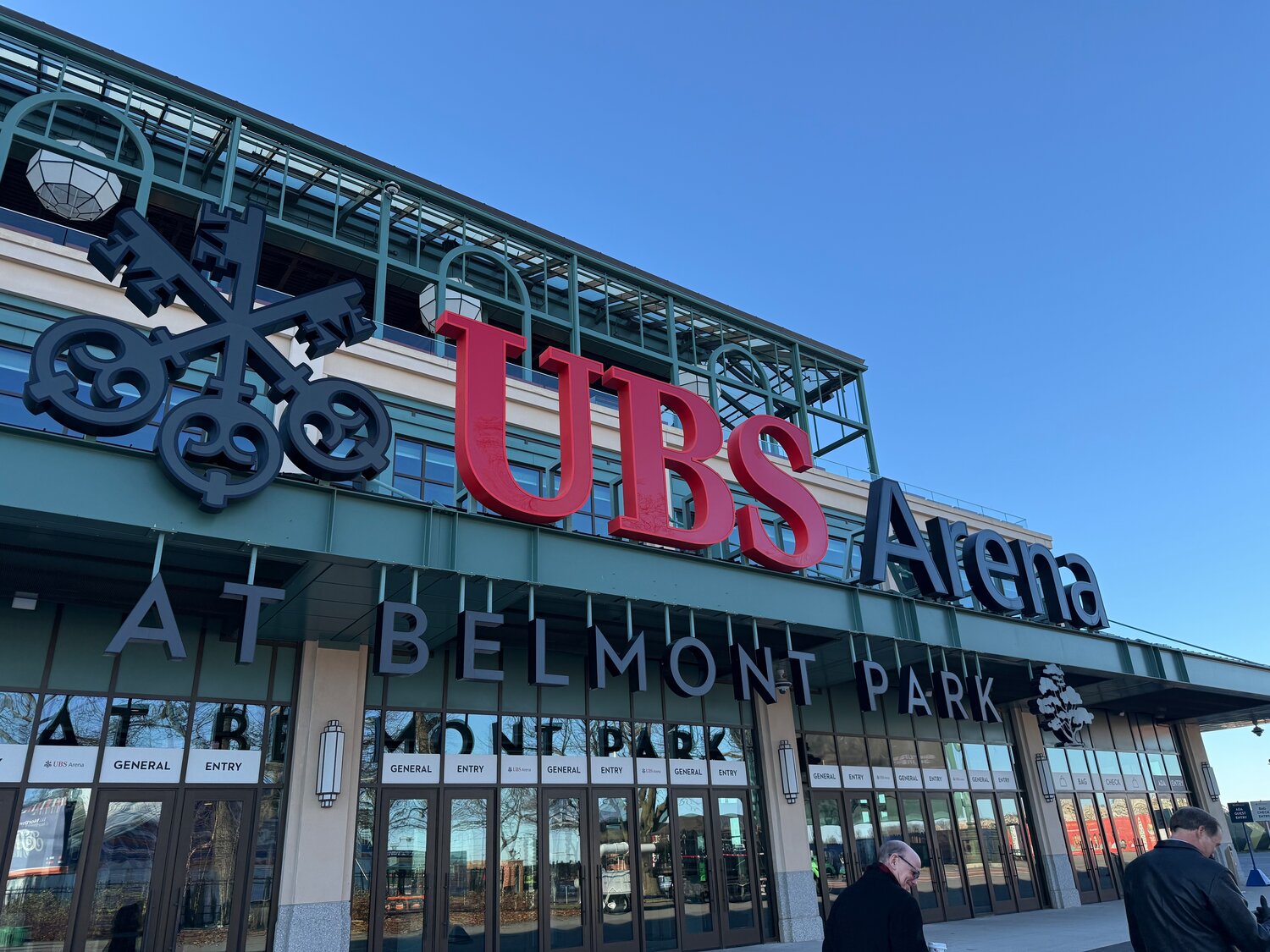


Elmont residents argue the parking permit system near UBS Arena must be expanded to prevent arena visitors from clogging up residential streets and blocking them from parking in front of their homes.
The push comes after the remaining portion of Sussex Road, south of 109th Street, was added to the permit system following legislation, sponsored by Assemblywoman Michaelle Solages, that passed the state senate and assembly on June 9.
The bill was introduced in January in response to ongoing resident complaints that visitors attending arena events are parking their motor vehicles on nearby streets to avoid paying for parking in one of the arena’s lots or the Belmont Park Garage, across from the arena, on Hempstead Turnpike.
The Town of Hempstead must wait until Gov. Kathy Hochul signs the bill before the town can enforce it.
Local advocates, along with Solages, say more residential streets need to be included ahead of the Belmont Park racetrack’s reopening in fall 2026, which they say will only escalate the parking problem.
Bob Barker, president of the Locustwood Gotham Civic Association, said despite the existing parking permit system, originally implemented in December 2021 after the town voted unanimously in response to resident complaints during the arena’s opening, visitors are still flooding streets adjacent to it and choosing to walk a longer distance to avoid paying for arena parking.
“When there’s arena events, people just park anywhere,” Barker said. “It’s crazy. But that’s why we implemented those signs.”
The UBS team declined to comment whether they are taking any actions to manage residential traffic concerns near the arena, but the arena’s website states that parking on many residential streets near the arena is prohibited and visitors should be aware of local parking rules before arriving.
Current restrictions prevent non-residents from parking on designated streets in the permit system without a valid permit. Only residents can obtain a permit through the Town of Hempstead after providing proof of residency and ownership of a motor vehicle. A permit is provided to all vehicle owners in each household, along with four guest passes.
Barker, who has been a leader in traffic improvement efforts since the arena’s opening, says the permit system has been incredibly helpful to him and his neighbors since it was first implemented. That is why, he said, the expansion is a positive step in the right direction for Elmont residents.
Dale Davids, a traffic safety officer of the civic association, agreed that the permit system has been an effective way of combating the parking issue and ensuring residents can drive and park on their streets without vehicles of arena patrons clogging streets.
But, Davids said, visitors are now parking on streets beyond the existing permit system, and he believes there’s a need to keep expanding it.
“What people are doing now is just parking further away,” Davids said of arena visitors.
However, not enough residents on certain streets support the expansion.
In an email sent to the Herald on July 16, Casey Sammon, a spokesperson for the Town of Hempstead, wrote that the town requires at least 95 percent of homeowners on a single street to approve the parking permit system in order for legislation to be introduced to the state legislature. As of July 16, Sammon wrote, only residents on Sussex Road garnered enough support to approve the expansion.
Barker is worried that residents on streets that have not been approved for the expansion are underestimating the impact the Belmont Park racetrack reopening in fall 2026 would have on traffic in the area.
“Where is all of that traffic going to go?” Barker asked. “They’re going to find a way to navigate through the community again and flood those areas.”
“A lot of people think they’re good because it’s not happening on their block yet,” Davids added. “Just wait until this stuff gets built.”
And, Barker said, by the time residents realize there’s a problem, it could take more months for legislation to be voted on and reviewed. “It’s a process,” Barker stressed.
Davids said now is the time for residents to start thinking about these parking restrictions. Waiting until the problem comes to residents’ doorsteps, he said, will only result in unnecessary frustration.
Assemblywoman Solages advocated for more involvement from the town itself. A larger conversation must be had, she stressed, in anticipation of the influx of traffic once the new racetrack facility opens.
“It’s always helpful to have folks advocate,” Solages said. “I think residents are suffering because of the parking situation.”
Solages suggested that the town implement its own solutions to traffic concerns, such as town-operated parking garages or a more encompassing parking permit system that stretches a larger area.
“We can’t just do this piecemeal thing where we’re expanding the parking permit grid every year or two,” she said. “We should have the town invest money and create a master plan for parking in that area.”
She also suggested traffic experts be included in conversations, who could better strategize long-term solutions for the area.
For now, Solages hopes the town is ready to implement parking restrictions as soon as Hochul signs the bill, which must be signed by Dec. 31.


