



Saying “Long Beach is a beach community” is like saying “There’s some sand on the shore”: It’s a glaring understatement. Not only is the city closely associated with waves, water and warm weather, but the beach and the boardwalk are inherent parts of city life — even in February, when the ground remains hidden by piles of snow.
The City Council understands that while the beach closes for the offseason, that doesn’t mean the city’s professional water-rescue team — more than 150 paid service people including lifeguards, EMTs and officers — treat the winter as a four-month-long vacation. The council recently authorized the purchase of two 2025 Yamaha WaveRunners to facilitate lifeguard activities on the water, and also agreed to buy two Nissan Frontier 4x4 pickup trucks to support land operations.
The proposal to acquire the WaveRunners, for a total of just over $35,500, was approved at a November council meeting, and funded by the city lifeguards’ machinery and equipment budget. The two new personal watercraft will replace two of the three units currently owned by the city, which have outlived their usefulness.
Chief of Lifeguards Rich Borawski reinforced how important the watercraft are, saying, “Last year we had 25 after-hours rescues, and jet skis were involved in some of them.” Though the older craft are also WaveRunners, Borawski used a more common, catchall term popularized by Kawasaki and its Jet Ski. “During our lifeguard hours on high-surf or high-rip-current days,” he said, “we put both jet skis in the water to patrol. They’re invaluable.”
The WaveRunners arrived at the Long Beach city garage last month, and will be ready for active deployment in the upcoming beach season. They are fitted with specialized collars that improve the rider’s stability when cresting sizable waves en route to swimmers or surfers in distress.
The resolution to purchase the Nissan pickups was approved at the Jan. 20 council meeting. The funds — a total of just over $86,700 — will also be drawn from the machinery and equipment budget. The new trucks will replace two of the lifeguards’ four current service vehicles — both well-used, though relatively low-mileage, 2013 models, one with 19,599 miles and the other with 28,460.
While a civilian vehicle with that age and mileage might not warrant urgent replacement, beach-based emergency vehicles must meet unusual demands. “The salt and the ocean do a tremendous amount of damage to the undercarriage,” explained Michael Robinson, Long Beach’s director of fleet management, who oversees the city garage and its vehicle supply. He added that trucks have a shorter functional lifespan. “With these vehicles, you’re not looking at the mileage — you’re looking at the wear and tear of the undercarriage. Especially the emergency equipment — the lighting, the electrical system.”
“The salt air and sand does a number on anything that’s metal,” Borawski emphasized, “and those trucks are in the sand and in the wind 24/7, from Memorial Day until the end of September.”
Robinson noted that the city will have a renewed focus on extending the life of all new vehicles, treating their undercarriages with a specialized undercoating to improve their durability.
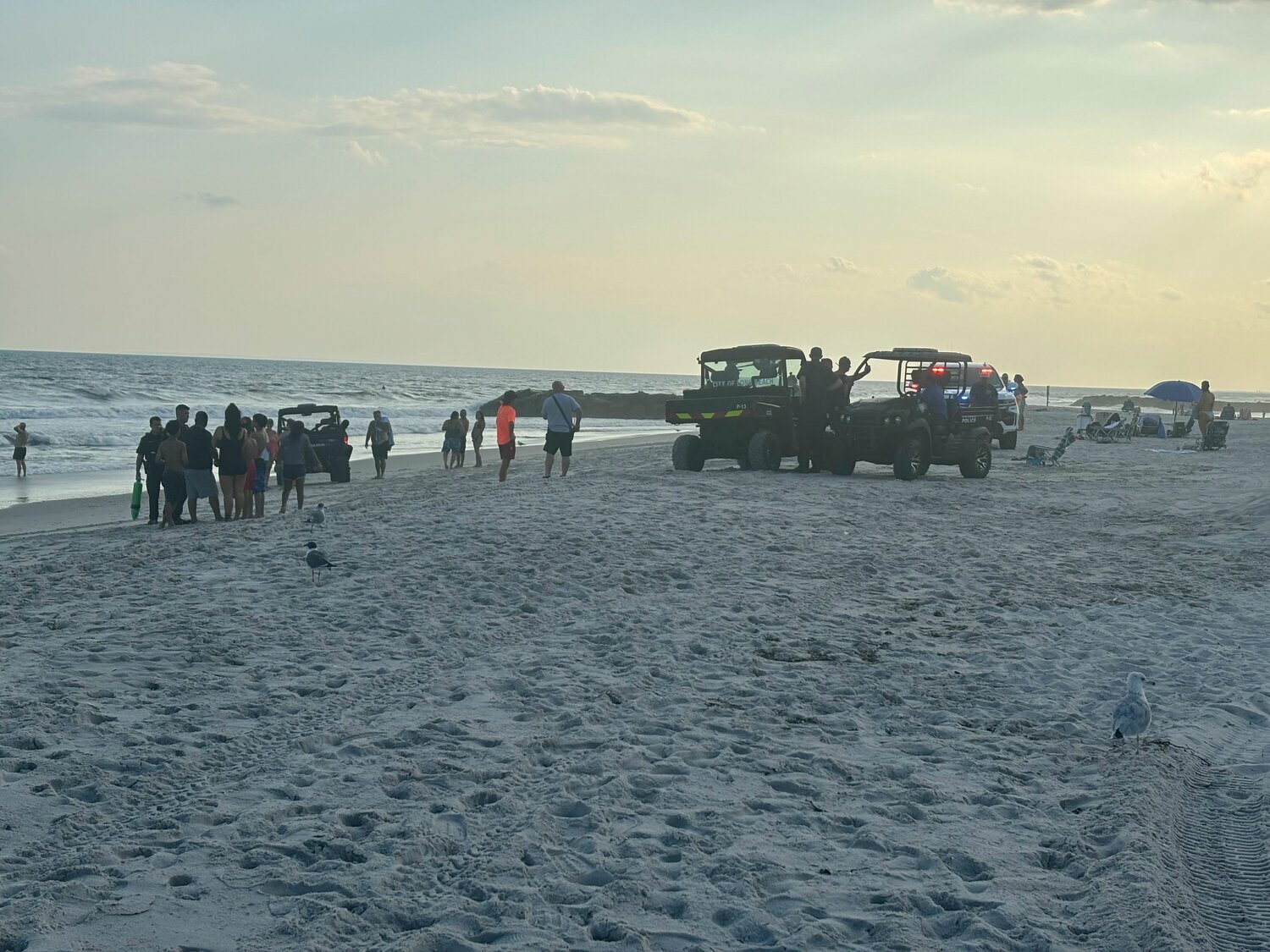
Both 2013 trucks were put in service after Hurricane Sandy destroyed the city’s previous emergency service vehicles. Of the four trucks now in operation, one is used for maintenance — such as removing all 24 lifeguard towers from the beach at the end of the season. The three others operate as emergency vehicles — handling challenges like deploying the Wave-Runners via trailer for after-hours operations, or following EMT-driven John Deere Gators — heavy-duty utility vehicles resembling overpowered golf carts — as backup emergency response. The lifeguards have four Gators in their service fleet as well, operated by EMTs and fitted with backboards and other medical equipment.
Though the truck purchase has been authorized, their delivery has not yet been finalized. Robinson added that one of the trucks to be replaced may be repurposed for non-emergency needs, extending its service life.
“Summer is just around the corner,” Councilman Michael Reinhart said in a statement. “Our team works year-round to ensure a safe and enjoyable beach season for our residents and visitors. These major upgrades will go a long way toward assisting our beach patrol and ensuring the best team on the beach has the best equipment to keep our beachgoers safe.”


