


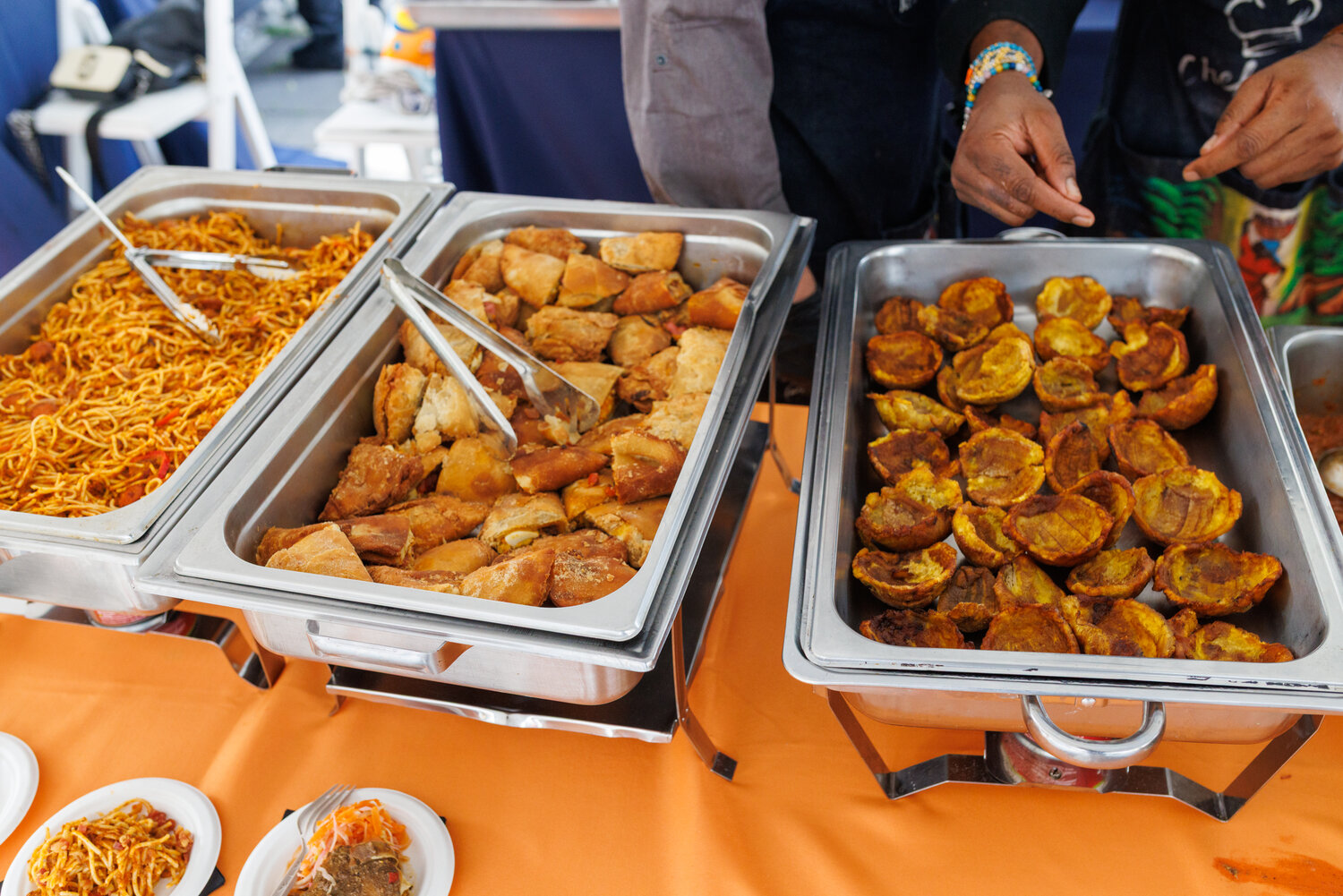


After four years of planning, the Creole Food Festival — founded by Fabrice Armand — was staged in Brooklyn, right under the Brooklyn Bridge at Emily Roebling Plaza.
More than 700 people attended the event, which has grown over seven years into a celebration of cuisines from across the African diaspora. The festival showcased top chefs of color from the Caribbean, South America, Africa and Latin America.
“We’ve always done it in Manhattan … but it is the first one for us, and we’ve always wanted to do Brooklyn,” Armand said.
Born in Haiti, Armand came to the United States as a child, spending summers in New York before moving permanently at 14. He attended Benjamin Cardozo High School in Queens and later became the first African American student body president at St. John’s University.
Looking back on his years growing up in Hempstead, he called it “a great community, very community-centric.”
As for the venue, Armand said the timing was right. “It’s not that we did not want to choose Brooklyn before,” he explained. “You just have to understand that Brooklyn has a different energy, you don’t enter Brooklyn around foodies and people that love flavor and culture any type of way.”
Because of a partnership with the city’s parks department, the event allowed people to enter for free, though food and drinks were sold separately. “Never before have we ever done that,” he said.
A collaboration with Time Out Market — a DUMBO-based food hall known for celebrating culinary diversity — was also key. While the permits came through the parks department, Armand credited Time Out Market’s backing with making access to the coveted plaza possible.
“I don’t think I would have ever gotten the Emily Roebling Plaza without Time Out Market,” he said. “Because of who they are and their trust in us, we were able to get it.”
The founder said diversity and inclusion are central to the festival’s mission — but sustaining that mission has become harder.
“In a time where the federal government is taking away DEI initiatives, what Time Out Market provides for us ,” he said. “They were able to help us bridge that gap,”
He also noted sponsorships have dropped sharply. “Normally we do about $20,000 in sponsorships. Easily. This year, we’ve only been able to do $6,000,” he said. To make it work, he and his business partner took out an extra loan.
Still, the festival continues to grow. Along with New York, it now runs in Miami, New Orleans, Atlanta — and soon, Washington, D.C. Long Island may be next.
“I love Long Island. I want to do it in Long Island,” Armand said. "But you have to enter Long Island properly.”


